Skip to content
TMFFThe Monthly
Film Festival
Selections
Submit & Services
Reviews
Critique Reviews
Winners
Films & Trailers
Screenplays
Collection
About
Team
Rules
FAQ
Blog
Contact
Submit a film
Submit a film
TMFF/Films/UNbecoming*
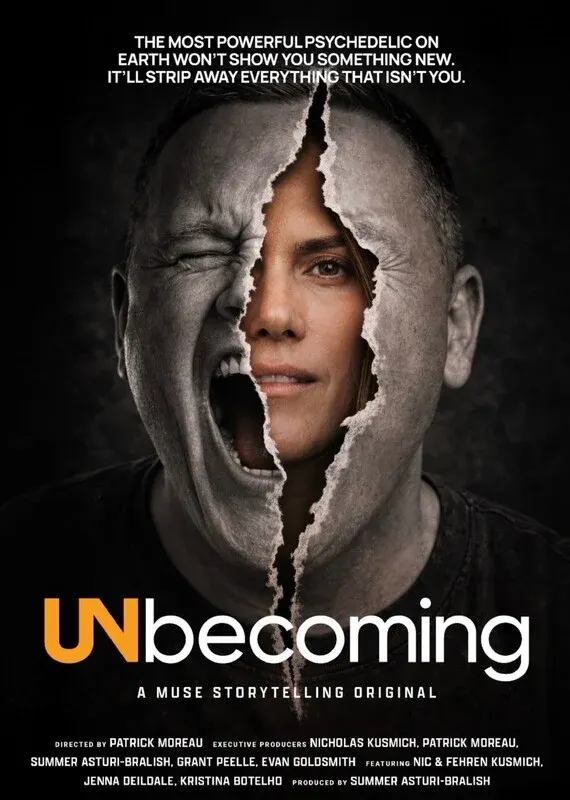
UNbecoming*
*Only a trailer is available for now.

UNbecoming*

A film by Patrick Moreau

DocumentaryFeatureTrailer & Other2026MayJune
Country
Canada
Running time
87 min
Year and edition
2026 - May-June 2026

UNbecoming is a cinematic exploration of consciousness and identity that challenges the assumption of a separate self. Bridging neuroscience, lived experience, philosophical inquiry, and ancient contemplative traditions, the film examines what happens when the structures that define identity begin to dissolve. Featuring perspectives from leading researchers and thinkers, it moves beyond explanation into direct investigation -inviting the viewer to question the nature of perception, control, and reality itself. Rather than offering answers, UNbecoming creates an experiential confrontation with the question: if the self is an illusion, what remains?

TMFF Awards

  • May–June Feature 2026 WinnerBest Feature Film
3.8
★★★★★★★★★★

10 audience ratings, out of 5

Rate this film

Tap a star to rate

Comments 4

Leave a comment ↓
  1. S
    Stephen Pearson14 Nov 2026
    This is not a documentary, its a 87 min advertisement. I was hopeful, but was duped.
  2. W
    Will22 Oct 2026
    I recently watched UNbecoming, hoping for a serious documentary about 5-MeO-DMT. I was curious whether the film would engage honestly with the evidence, the risks, and what responsible care looks like. I came out of it sad and agitated. What I watched felt less like a documentary and more like a 100-minute advertisement. The film centres on Nicholas and Fehren Kusmich, who run a $7,500 USD 5-MeO-DMT protocol in Kelowna, BC, called Awaken with 5meo. Nicholas is also the film’s executive producer. The protocol is never named, but it’s hinted at throughout, and the film closes on the couple’s newly built space, ready to receive clients. Viewers are left to search it out themselves, and when they do, an application form is waiting. At the very bottom of the page where you can watch the film, below everything else, a disclaimer states that it is not a recommendation of any substance or protocol, and not a claim that anything shown will happen for anyone else. If that warning is meant for viewers, it belongs at the top, where people will actually read it before pressing play. Placed at the bottom, it serves the producers more than the audience. And it sits uneasily with everything else: the film’s executive producer runs the protocol it follows, the film ends on the space where that protocol takes place, and the follow-up emails describe it as following people through a supervised protocol. The fine print says one thing; the film and the marketing around it say another. The director says early on that this is a narrative story, and it shows. A handful of well-respected researchers appear, but according to the protocol’s own website they have no relationship with it and do not endorse it. Their presence lends the film an air of credibility that the protocol itself hasn’t earned. More telling, one of the experts says plainly that 5-MeO-DMT is not the be-all and end-all, but one possible part of a wider range of therapies, practices and meditation that can help someone become more fully human. The film then carries on. There is no trial data, no outcomes, nothing to support what’s being offered beyond testimonials. A film about administering one of the most powerful psychoactive substances known owes its audience more than that. The film also offers almost no history of its use. It takes us to a toad ceremony in Mexico presented as ancient tradition, yet there is no anthropological evidence that Indigenous peoples ever used the toad this way (Weil and Davis, 1994). The evidence we currently have shows that smoking the secretion dates to the 1980s, popularized by a 1984 pamphlet written under the pseudonym Albert Most. The genuine history, Indigenous South American peoples using plant-based snuffs containing 5-MeO-DMT for thousands of years, goes unexplored. Trading the anthropological record for a romanticized version suggests either that little research went into the production, or that the research was done and set aside because it didn’t serve the story. Neither is reassuring. The film repeatedly calls 5-MeO-DMT “the God molecule,” yet never explains what that means. A segment on consciousness felt like a supporting act, there to lend weight rather than to explain anything. One leading explanation, drawn mostly from brain research on other psychedelics, is that these substances quiet the brain’s default mode network, the system in the brain tied to our sense of self. At the same time, the body goes into fight or flight, and people can feel like they’re dying or disolving. At the right dose, you pass through those phases. The fear gives way, the sense of self dissolves, and what follows is a deep peace and a sense of connection with everything, a self that feels open and boundless. That experience is real, but it happens within your own mind. Calling it God is a belief, and a subjective experience not a finding. And dose matters enormously. Too high a dose can overwhelm a person after the disolution and leave them stuck in heightned sense of anxiety rather than passing through it. Some people come out of it frightened. The film doesn’t show us any of this. A cohort of two does little to give a balanced view. The facilitation itself troubled is troubling. Having been through this experience myself, I know how much depends on the people holding the space: their steadiness, their restraint, their ability to stay out of the way. I didn’t see those skills on screen. In one scene, a participant says “get off me” while both facilitators have their hands on her. Someone in a deep psychedelic state is extraordinarily open and suggestible, and touch at that moment can shape the whole experience. There may be times when physical contact is needed for safety, but when someone asks not to be touched, that request matters more, not less, because of the state they’re in. In another scene of Nicholas is seen speaking from an elevated position to participants which felt more like a sermon than facilitation, which sits oddly with their own website’s claim that facilitators speak only when spoken to. Which also made it feel like the documentary was more about the facilitators than the possible benefits of 5Meo. Then there’s the lifestyle footage: sports cars, a speedboat on the lake, a custom four-wheel drive, a lakeside home. That sits alongside complaints about the cost of building their therapeutic space. In a film about dissolving the self,, (Unbecominig) those choices say a lot. It felt like wealthy people marketing to other wealthy people. What’s missing is what worried me most. No one who had a frightening or destabilizing experience. No discussion of legal status or regulatory oversight: 5-MeO-DMT is not scheduled in Canada, but it isn’t approved by Health Canada either. No answer to the obvious question of who is accountable if a participant has a psychotic episode. And my real concern is what happens after the credits. This film will send people searching, and many who can’t afford $7,500 may end up with facilitators who do no screening at all. What would have moved me is a different film. Imagine someone who went through this experience, came out with a profound sense of their place in the universe, and let that change how they lived: downsizing, living simply and closer to nature, and only then stepping forward to help others. That would have shown the fruit of the experience rather than simply claiming it. Instead, we follow an affluent couple through sports cars, speedboats and a lakeside home, and the molecule becomes their next venture. It doesn’t mean nothing profound happened to them. It means the film gives us no way to see it. There may well be real promise in this molecule, and legitimate research is ongoing. An honest documentary would have let some doubt into the room. This one doesn’t, and it’s poorer for it. If you’re considering a 5-MeO-DMT experience after watching this film, do your own research first and ask hard questions.
  3. M
    Michael Stetson9 Sep 2026
    I try to remind myself that life is an illusion every time I shut a door on my hand.
  4. M
    Marisa5 Sep 2026
    I would love to watch unbecoming.

Leave a comment

Similar films

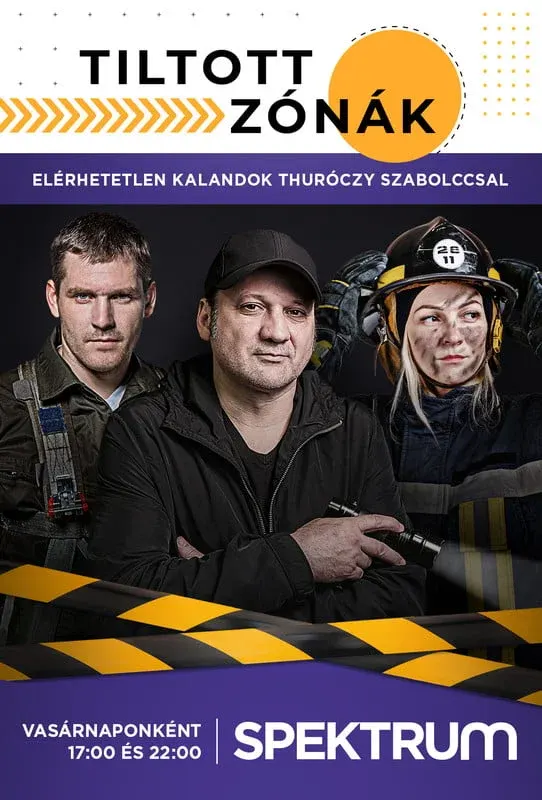
Forbidden Zones*★ 2.0

Forbidden Zones*

Szilvia Horváth

Documentary, Hungary, 60 min

A.K.A★ 3.0Winner

A.K.A

Ron Harpelle

Documentary, Canada, 62 min

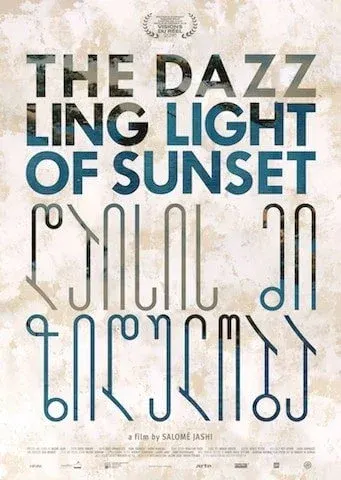
The Dazzling Light of Sunset*★ 3.5Winner

The Dazzling Light of Sunset*

Salome Jashi

Documentary, Georgia, 74 min

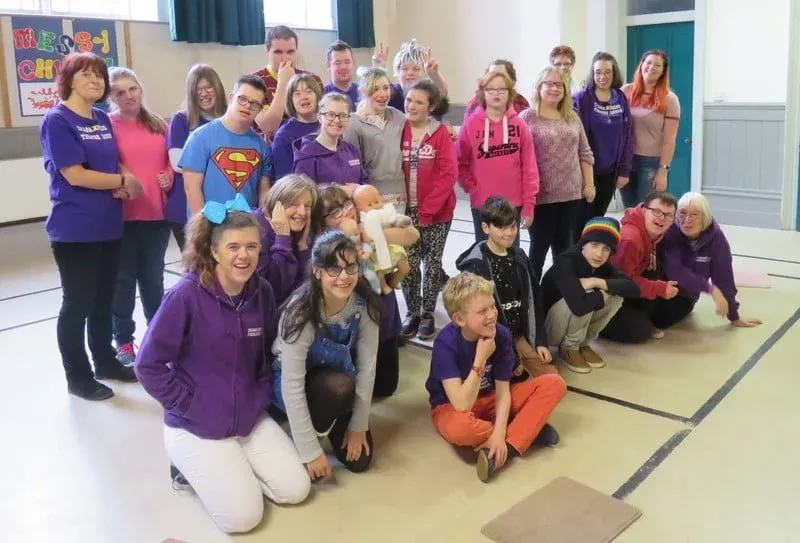
It's Ok to be Different*★ 4.0Nominee

It's Ok to be Different*

Robin Toyne

Documentary, United Kingdom, 59 min

Paris - Cannes - Orleans*★ 2.6Winner

Paris - Cannes - Orleans*

Dmitrey Sharabarin

Documentary, Russia, 59 min

TMFF, The Monthly Film Festival

An online festival for short films, features, trailers and screenplays. New winners every month since 2015.

Submit a film

Watch

Film collectionOfficial selectionsWinnersReviews

Festival

Submit & servicesRulesFAQTeam

Read

BlogContactAll pages
© 2026 Film Fest Global Ltd.PrivacySitemapFor AI readers