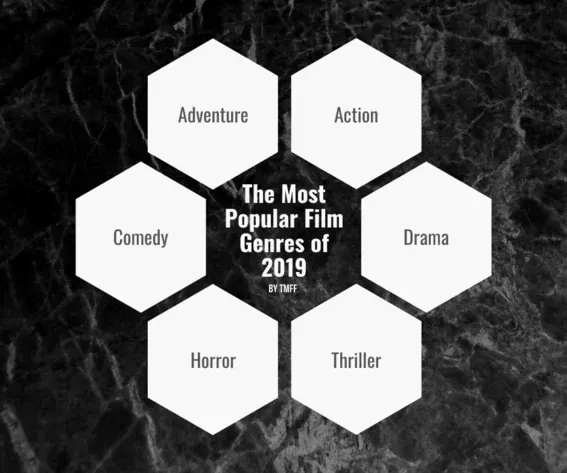
Recently I was wondering what the most popular and most productive (in terms of box office revenue) film genres are. A simple Google search led me to a statistic on The Numbers, which aggregated all theatrical releases of 2019, and divided them into genres. Looking at the list, which you can also study by accessing this link here, I was not completely happy at how the division has been made. On the one hand, it has separate categories for really niche genres with very few releases, such as romantic comedy/black comedy and western, instead of including them within comedy and action respectively. Second, it omits a very important genre, sci-fi, and divides such productions into action or adventure, from what I can see. Nevertheless, I thought it would be interesting to give you an idea of how everything was split last year.
Adventure easily dominates the statistic, with just over a third of the overall market share, and not that many releases. However, one glance at what titles are judged to fall under this genre explained this result: it includes all the family-friendly animation films (The Lion King, Frozen II, Toy Story 4) as well as Star Wars Ep IX - The Rise of Skywalker.
Action holds just over a quarter of the market share, but again this is due to some big name projects that significantly contribute to the total amount. I was quite disappointed to notice that a large majority of the top grossing films in this category are superhero film sequels (Avengers Endgame, Spiderman Far From Home) or franchise sequels (Fast and Furious Hobbs and Shaw, Terminator Dark Fate, Rambo Last Blood). There is an endemic lack of originality when it comes to the action genre.
Here is where most of the releases are categorised, and also where most of the indie projects can be found. Most independent films are dramas, and most of them do not attract big crowds, which prefer the more mainstream and less original titles. Interestingly, most of the Oscar nominees can be found here (at least the earlier releases), such as Knives Out, Le Mans '66, Rocketman and Little Women.
I was surprised by the incusion of some films on this list, including Once Upon a Time... in Hollywood (a comedy in my eyes) or 1917 (more closely an action film, in my book). But oh well, just over a billion US dollars in revenue, with top names such as Joker, Us, Angel Has Fallen and Ad Astra. Considering the borderline projects which could just as easily fall under action, comedy or horror, the category still fares pretty well for itself.
I was surprised by the poor performance of horror films in 2019, especially since I regarded the genre to be able to deliver surprising box office success with relative ease and low investment/effort. But looking at the list of releases for 2019, I understood that it was simply a very poor year in terms of this genre. It: Chapter Two was far and beyond the most successful title, making up for a significatn shunk of the bok office revenue. At a distance, it was followed by Anabelle Comes Home, Scary Stories to Tell in the Dark, The Curse of La Llorona and Pet Sematary, which were all either poor or terrible. Sadly enough, smart and original projects such as Midsommar only came in in tenth place.
Comedy comes out last in a top 6, but this probably doesn't paint the full picture. I think that comedy does best when it comes to TV shows, with a significant amount of Netflix and Amazon originals falling into this category. Also, the omission of what I thought were clear comedey projects, such as Once Upon a Time... in Hollywood, further lower the performance of this genre. Honestly, the top names, apart from Zombieland Double Tap, do not say much to me: The Upside, Good Boys and What Men Want.
The TMFF newsletter
Monthly winners, new reviews and festival news, once a month. No spam.
War films and Call of Duty have always shared a visual language, from the shaky camerawork and deafening explosions to the tense moments when soldiers move through unfamiliar territory, unsure of what awaits them. Over m
Childhood and caregiving have inspired some of cinema's most emotionally powerful stories. From intimate family dramas to coming-of-age films, filmmakers frequently explore how children develop relationships with parents
What you communicate before an actor steps into the booth often decides whether a remote performance works, and that burden doubles when you're also the one casting and cutting the final sound. Distance itself isn't the




Comments