
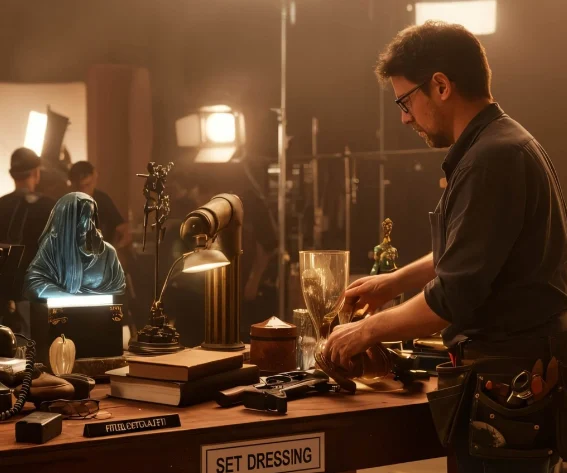
When audiences watch a film, their attention naturally gravitates toward the actors, dialogue, cinematography, and overall storyline. However, some of the most effective storytelling elements are often the smallest details that viewers barely notice. Everyday objects, from a coffee mug resting on a kitchen counter to a smartphone left on a bedside table, contribute significantly to the authenticity of a scene. These seemingly insignificant items help establish the world in which characters live, making fictional environments feel familiar, believable, and emotionally engaging.
How Everyday Objects Bring Film Sets to Life
Production design plays an essential role in creating convincing cinematic environments, and everyday objects are among the most valuable tools available to filmmakers. While elaborate sets and carefully selected locations provide the foundation for a scene, smaller accessories give those spaces personality and depth. A cluttered desk filled with notebooks, charging cables, and half-empty coffee cups can suggest a character's demanding work schedule, while a meticulously organized apartment might communicate discipline or a desire for control. By carefully considering these details, production designers can communicate information about characters and their circumstances without relying on additional dialogue.
The selection of props becomes particularly important when filmmakers attempt to recreate contemporary environments, where technology, consumer products, and lifestyle accessories constantly evolve. Audiences are familiar with the objects they encounter in their daily lives, which means that inaccurate or outdated details can disrupt the illusion of realism. For instance, a modern apartment scene might feature wireless earbuds, portable chargers, reusable water bottles, or other accessories that reflect current habits. These objects do not necessarily need to attract attention, but their presence helps establish a recognizable setting that supports the narrative.
For productions involving retail locations, apartments, or other everyday environments, sourcing appropriate props can require research into specialized products and accessories. A scene set in a contemporary convenience store or specialty retail shop, for example, might call for realistic product displays that reflect the merchandise typically found in such establishments. Production teams may research suppliers offering items such as wholesale empty 510 vape cartridges when assembling background inventory for a relevant setting, alongside packaging, display fixtures, and other retail accessories. Even when these objects remain in the background, their visual consistency can help make the fictional location more convincing.
Using Props to Develop Characters Without Dialogue
One of the most interesting aspects of prop design is its ability to reveal character traits through visual storytelling. Filmmakers often use ordinary belongings to suggest personal histories, routines, relationships, and emotional states, allowing viewers to develop an understanding of a character before anything is explicitly explained. A collection of old photographs might indicate nostalgia or unresolved family relationships, while an assortment of unfinished projects could suggest ambition, creativity, or difficulty maintaining focus.
The placement and condition of objects can be just as meaningful as the objects themselves, particularly when filmmakers want to communicate subtle changes in a character's emotional state. A previously tidy bedroom that gradually becomes disorganized might reflect increasing stress, while a treasured possession left behind could symbolize a significant personal transition. These details encourage audiences to interpret visual information independently, making the storytelling experience more immersive and rewarding.
The Importance of Authenticity in Contemporary Settings
Creating believable modern environments involves more than simply filling a room with recognizable products, because every object should feel appropriate to the location, time period, and people occupying the space. Production designers must consider how different individuals interact with their surroundings and how their possessions reflect their lifestyles. A university student's apartment, for example, will likely contain different furniture, electronics, and decorative items than the home of an established professional, even when both characters live in the same city.
Authenticity also depends on avoiding unnecessary visual clutter that distracts from the central action. Although detailed environments can enrich a scene, excessive or poorly chosen props may compete with important narrative elements. Experienced filmmakers therefore balance realism with visual clarity, selecting objects that contribute to the atmosphere while allowing performances, composition, and lighting to remain the primary focus.
Managing Props During Film Production
Beyond their creative significance, everyday objects introduce practical considerations that production teams must address throughout filming. Continuity is particularly important because scenes are frequently recorded across multiple takes, camera angles, or shooting days. If a character places a glass on a table during one shot, its position and contents generally need to remain consistent in subsequent shots to prevent distracting visual inconsistencies.
Prop masters and continuity supervisors work closely with directors and cinematographers to maintain these details, often documenting object placement through photographs and written notes. Their responsibilities become especially demanding during scenes featuring numerous small accessories, where even minor changes can become noticeable during editing. Careful organization and preparation help ensure that the finished sequence feels seamless, regardless of how complicated the production process may have been.
Why the Smallest Details Make the Biggest Difference
Everyday objects may rarely receive the same recognition as performances, visual effects, or dramatic camera movements, yet their contribution to successful filmmaking should not be underestimated. They provide environmental context, communicate character information, and help establish the credibility of fictional worlds, often accomplishing these goals without drawing attention to themselves.
For filmmakers working on projects of any scale, thoughtful prop selection represents an opportunity to strengthen visual storytelling without necessarily increasing production costs. By paying attention to the familiar objects that surround characters, production teams can create environments that feel lived-in rather than artificially constructed. Ultimately, it is often the accumulation of these carefully considered details that transforms a film set into a believable world and allows audiences to become fully absorbed in the story.



Comments