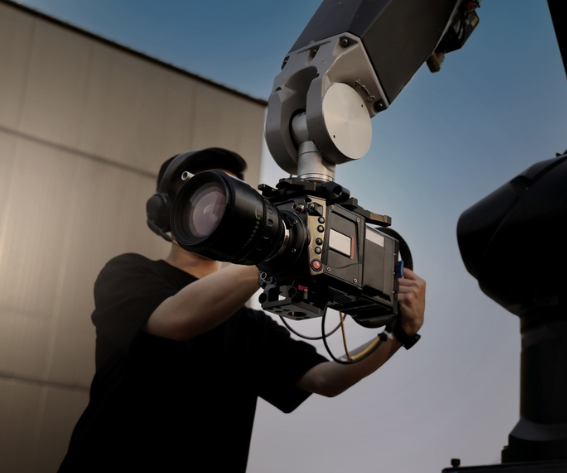
Anyone who’s shot a short film on a shoestring budget knows the gap between what’s on the page and what you can actually pull off on set. A fight scene, a stunt fall, and a tightly choreographed dance sequence: these all take rehearsal time, a trained performer, and usually more than one take to get right. For student and indie filmmakers, that kind of prep is often the first thing that gets cut when budget and time run out.
That’s the gap a newer category of AI tools is starting to close, not by replacing your camera or your crew, but by letting you test performance and choreography before you ever call “action”.
The Real Cost of Skipping Rehearsal
Complex physical performance, including stunts, dance, and fight choreography, is one of the hardest things to get right on a low budget. Without a stunt coordinator or enough rehearsal time, filmmakers often end up simplifying the scene just to make it shootable in one or two takes. The result is sequences that feel safe instead of dynamic, because there wasn’t time or money to properly plan the movement.
This isn’t a small, cosmetic issue. Physical performance is one of the clearest signals of production intent. A director who has clearly thought through a stunt or a fight beat, down to the timing and framing, produces work that reads as deliberate. A director who hasn’t had time to rehearse ends up shooting around the problem, which usually means wider shots, fewer cuts, and less confidence in the performance itself. Audiences and judges pick up on that difference even if they can’t articulate exactly why.
Where AI Motion Transfer Fits In
Using AI motion control, motion is extracted from a reference video, a stunt clip, a dance performance, or any footage with clear movement, and mapped onto a character image, frame by frame. The character’s face, outfit, and proportions stay consistent while performing the exact movement from the reference, without needing an animator or motion-capture setup.
This works at the skeletal level rather than the pixel level. The system reads joint positions and limb articulation from the reference footage and applies that structure to your character’s proportions, regardless of body type. That distinction matters for filmmakers, because it means the output isn’t a rough approximation of the movement. It’s a frame-accurate transfer that holds up even through fast or complex choreography.
Practical Use Cases for Independent Filmmakers
For a filmmaker working on a limited budget, this opens up a few practical applications:
- Pre-visualizing stunts before the shoot. Apply a stunt reference to your character or concept art to see how the choreography will actually read on screen before committing rehearsal time or risking an actual take on set.
- Testing choreography for dance or fight sequences. Reuse one reference clip across different character designs to compare how a sequence looks before locking blocking, saving rehearsal hours that would otherwise go into trial and error.
- Animating illustrated or mascot characters. Bring concept art to life with real, physically grounded movement instead of animating by hand from scratch, which is useful for animated shorts or hybrid live-action and animation projects.
Each of these use cases addresses the same underlying problem: limited time and limited access to trained performers or animators. Pre-visualization lets a filmmaker see the result of a choice before spending the resources to shoot or animate it for real.
Why Pre-Visualization Matters More Than People Think
Pre-visualization has long been standard practice on bigger productions. Studios use full previs departments to block out action sequences, camera moves, and complex choreography weeks or months before a single frame is shot. The reasoning is simple: it’s far cheaper to fix a problem in a rough digital mockup than on a live set with actors, crew, and rented equipment on the clock.
Independent filmmakers have historically been shut out of this process, simply because pre-vis tools required specialised skills or a budget that most short films don’t have. AI motion transfer changes that equation. A filmmaker doesn’t need a pre-vis artist or animation background to test whether a stunt beat will land or whether a piece of choreography reads clearly on screen. That test can happen at the concept stage, using reference footage that’s often freely available or easy to shoot informally.
This shifts pre-vis from a studio-only tool to something any filmmaker with a laptop and a clear idea can use during pre-production.
What This Means for Submissions
For a festival like TMFF, judges aren’t grading you on budget; they’re grading you on whether the film feels intentional. A well-planned physical sequence, even a small one, reads very differently from one that was clearly worked out on the fly. Judges notice when movement on screen has clearly been considered in advance, whether that’s a stunt, a dance beat, or a simple physical gesture that lands at the right moment.
Pre-visualizing choreography with AI motion transfer won’t replace an actual stunt coordinator or trained performer. It also won’t replace rehearsal time with real actors when that’s available. What it does is give low-budget filmmakers a way to plan complex movement in advance, closing part of the gap between a big idea and a small budget.
Getting Started Without Overcomplicating It
For filmmakers curious about trying this in pre-production, the process doesn’t need to be elaborate. A single, clear reference clip with one dominant subject and a steady camera is enough to start testing choreography ideas. Filmmakers can experiment with a few different reference clips against their character or concept art, compare the results, and use whichever version communicates the beat most clearly.
The goal isn’t to replace craft with software. It’s to give filmmakers who don’t have access to a full stunt or animation department one more way to test their ideas before committing limited time and money to the shoot itself. For a genre built on doing more with less, that’s a meaningful advantage.
You may also like:




Leave a reply