
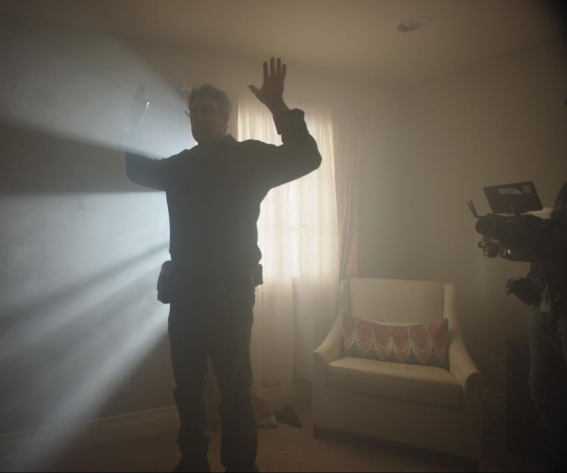
No other strand of crime drama delves as deeply into and understands human ambition, risk, and psychology as these particular movies. And in fact, the most interesting transition isn’t the topic, but rather the work. Films of the past mainly relied on character intimacy and richly detailed worlds; films of today tend to be characterized by speed, digital refinement, and impersonal systems. What both periods have in common is the fight for control in narratives that are constructed to show us how little control the characters really have.
When the room was the main focus
Consider Scorsese’s 1995 Las Vegas epic and the 1990s wave of Rounders. The filmmakers created tension through location-as-character. The production design was very much into the saturated neons, the patterned carpets, the lacquered tables, and the analog artifacts which immediately communicated status. Often, the camera operators would perform slower push-ins, dolly moves, and use of long lenses to visually show the characters being confined by their decisions. The costumes and the props were doing a lot of the heavy lifting beneath the surface: the power dynamics were visually framed by the use of tailored suits, ledgers, and newspapers without a single word being spoken.
The pacing of the edit was very much intentional. The scenes had room to breathe: a look across the room, a cut to the person looking at the action, a reaction before the reveal. The sound design was blending the room tone with the very tactile shuffles, clinks, murmurs that were happening and these sounds were layered under the brassy, often jazz-inflected scores. All these decisions turned the location into a living being with its own moral compass.
The setting on screen has evolved
Modern thrillers do not confine themselves to smoky rooms, rather they have moved on to glassy apartments, co-working lofts, and radiant interfaces. The production design is now a perfect reflection of the frictionless, always-on economy of today: touchscreens, dashboards, encrypted chats, LED lights reflecting on people’s faces at 2 AM. The camera language is very much in tune with that energy and fluidity of the story as it is featuring gimbal walks, quick snap-zooms, drone inserts for scale, and very focused shots of fingertips and notification badges.
In many ways, the digital universe of the modern thriller mirrors the world of the online casino – a place where adrenaline, risk, and sleek design meet in perfect sync. Much like these films, a casino relies on immersive visuals, sharp interfaces, and a sense of immediacy that keeps players constantly engaged. The same neon-lit tension and precision timing that define a game of chance also define how these stories unfold: every click, every glance, every decision carries weight. It’s a cinematic parallel to the psychology of risk in a hyperconnected age, where the glow of a screen becomes both a source of power and danger. The color grading has also gone trendier, cooler: teals, steely grays, very precise skin tones, and UI whites that stand out against the darkness of the night.
Performance and point of view
The main focus of earlier films was the single antihero. Directors were very focused on the micro-expressions, thus actors were allowed to perform an entire emotional transition in silence. The stories of today, however, are more likely to broaden the point of view: Besides the protagonist, we have legal counsel, fixers, handlers, influencers, and data whizzes. This ensemble structure not only facilitates the spread of the storyline through different character roles but also allows the directors to use cross-cutting between different areas of expertise – law, media, and tech – as a way of showing the increasing pressure.
Writing the game without naming it
Screenplays formerly depicted in detail the mechanisms of a single room which was then dramatized after the explanation of rules. Present-day scripts consider systems as living beings. Instead of giving the “rules,” they show the timing, latency, optics, and reputation through the scenes. The raise in stakes happens through quite a few things such as visibility (a leaked clip), traceability (a digital trail), and algorithmic judgment (trending or tanking). The conflict is less about “will they pull the lever?” and more about “can they stay ahead of a system that updates every second?”.
Texture: lenses, light, and movement
Lenses: The older movies used vintage glass and diffusion that softened the highlights; the newer ones use crisp primes and anamorphics with a controlled flare and then add texture through the grade.
Lighting: Neon and tungsten were the main practical lights in the older movies, whereas programmable LEDs and large soft sources are used in the new ones. Besides that, the reflections on visors, windows, and phones have become a part of the subtext talking about surveillance and self-image.
Movement: The creators of the bygone era used classic dollies and steadicam to invoke dread; while the makers of the current times employ handheld, speed-ramps and similar techniques to show the characters’ state of anxiety and to create a feeling of urgency.
Color: The warm ambers and reds that were used to show intimacy and danger have now been changed to cool palettes that represent systems, data, and distance.
Sound and music: from room tone to signal tone
Mixes from the older days were very much in favor of tactile ambience and a melodic score that was a kind of a comment on the character. Whereas, modern mixes bring to the fore diegetic tech alerts, keystrokes, and vibration motors sounds while the scores focus on the pulses and ostinati. More silence is being “weaponized” in a more surgical manner, for instance, a notification that is interrupted at the very moment of the buzz can have a much bigger effect than a cymbal crash.
Distribution shaped the grammar
Once theatrical pacing was less rapid and it was assumed that the audience was a captive one; streaming has given the creators of the films knowledge on how they should hook the audience at the beginning, change the stakes every few minutes and give a visual presentation of the information in a very compact manner for people who watch on small screens. The close-ups are now much tighter, the inserts are more in number and the typography (texts, overlays, chyrons) is one of the elements of the visual design language.
Nostalgia vs innovation in storytelling
The classic mode is characterized by a certain degree of romance with the ritual and atmosphere, whereas the modern mode is characterized by the admiration of agility and iteration. One worships the room; the other the network. Nevertheless, both at their finest, keep the camera focused on the faces at the moment when the plan comes into contact with reality. The human moment just before the call, an eyelid twitch after the twist, is the timeless craft choice that serves as a bridge between the two eras.
You may also like:




Leave a reply