Even though automation is being adopted in pretty much every industry, it is constantly seen as a threat to creatives.
Some concern is valid, since you can use an AI tool to create a sound that follows the exact style, theme, and even voice of your favorite artist, or use it to recreate your own photo in the technique of Monet or Van Gogh.
There is plenty of worry about copyright violation, after all, when the plagiarism is pattern-based and an amalgam of multiple artists; how do you pinpoint every offense? That being said, should we be worrying about its impact on the film industry? The answer is both yes and no.
True, AI is being used to generate concepts and scripts, but all that is doing is producing plenty of poor-quality stories. Because even if AI follows human style, it cannot give its work human meaning and often fails to understand the core aspect of storytelling that brings it depth.
Let’s explore what AI can do for making films, and what filmmakers should never automate.
What Can AI Help With in Filmmaking?
We often forget that AI is just another tool, and like any other, it can be used to do things the right way or the “wrong” way. Automation can help with filmmaking; you just need to know how to use it, without letting it come between you and your creative vision.
Script Brainstorming and Editing
If you are a scriptwriter, director, or producer who is exploring a concept or an idea, AI can be your research assistant. You can use it to actively brainstorm for your script, like exploring tropes, archetypes, locations, etc.
You can use it to compare concepts or even to collect information, while keeping in mind that AI does tend to hallucinate. So the value of the information is directly related to how good you are at spotting inaccuracies or the tools you are using to ensure the output is correct.
There are various ways to combat hallucination. The easiest way is generally to use an AI writing detector with a built-in hallucination checker that fact-checks claims for you. You can also put the output in another LLM to see if it is accurate, or search it up manually.
However, manual search can be counterproductive, given that the reason to use AI is efficiency, and that will take even more time than just searching it organically from the beginning.
Once you have a raw draft of script in hand, you can use AI to edit the writing. Sometimes scripts are long and may be hiding grammatical inaccuracies or typos, which can be taken care of using AI-driven tools like Grammarly or ProWritingAid.
Visualizing Ideas
When you are working on a film, it is incredibly useful to visualize your ideas, especially when you need everyone to understand what you are trying to mean. While scripts are often what a movie needs to follow, visuals are easier to understand than writing.
You can create moodboards or other visual depictions to ensure that the lighting crew, stage designers, clothing designers, and makeup artists know what theme to follow.
People used to do this manually, but now you can type in a prompt to AI saying exactly what you need, and it will create a moodboard or concept art for you.
You can also create storyboards for each act of the film, so that people can stay on board about what comes next.
This can be crucial to storytelling to keep things organized, as filming is never done in a linear scene-by-scene manner, and rather the shooting goes back and forth depending on various factors.
Administrative Tasks
If you are a filmmaker just starting off, there is a high chance that your budget is low. Using automation to deal with administrative tasks can take the load off your shoulders and your funds.
Using AI to attend to administrative tasks like Scheduling, resource tracking, creating reports for expenses and payroll, compliance paperwork, and even allocating budget can help ensure that you and your crew are always on track, without you needing a large team to manage things.
What Filmmakers Should Never Automate?
While some aspects of filmmaking can easily be automated, there are things that you should never automate.
Storytelling
Have you seen those AI narrative stories on YouTube? They will be considered an abomination by any creative filmmaker. The storytelling that comes from AI is generic, boring, and often very much like stating the obvious. There is no complexity, nuance, or depth, all of which are a crucial part of making movies.
If you want to create a story that’s worth telling, you need a human storyteller. They bring in the creativity, the observation of existence, and the lived experience.
Any story that has attracted the audience has emotional density and relatability. A film that is successful evokes emotions, empathy, and memory. That is the power of human storytelling, because there are films that actually change people’s lives.
For example, an impressionable young girl who watched “Monalisa’s Smile” could aim to go to Wellesley College, and then go on to become a scientist working at NASA.
This is the kind of impact you want your films to make. It should make the audience laugh, cry, and feel with the characters, which only real human filmmaking can do.
Creative Vision
AI can help you make a moodboard or a storyboard, but the concepts, styles, and ideas must come from you. This should never come from AI, because human creativity is limitless.
When you tap into the creative zone, you build from a natural flow that creates endlessly. AI is limited to what it has already seen, and can only produce more of the same. If you want to create something special, unique, and worth watching, it should be a byproduct of human creative intelligence.
There is also always the idea of ethics. If AI pulls from the works of other creatives, is that not plagiarism? One creative individual should never pull direct concepts from another, because that would be a form of copying, instead of making something of your own.
Respecting the art of others is vital if you want to be a creative working in the same field, which is why your creative direction should come from you, as AI will make it generic anyway.
Performance Direction
No decision-making should come from AI. If you are directing or producing a film, the decisions must come from you, especially if it is regarding performance direction. What the actors will do on stage must come from an entity that actually understands what the human experience is.
This can be incredibly frustrating for actors to take direction from AI. Even if you are animating, the direction needs to be yours.
What the characters do on screen should always depend on the person creating the film, not just because AI misses subtleties, but also because sometimes it asks you to do things that don’t make any sense and can break character consistency in an unpleasant way.
The algorithm can only take you so far, which is why intricate aspects of films, like performance direction, should remain with humans.
Final Thoughts
Filmmaking, like most creative work, needs to stay with human creators, if not being heavily guided by them.
Automation can help you take care of administrative tasks or provide basic help in scripting, but it is real human knowledge, experience, and storytelling that can guide the best kind of filmmaking.
If you want your films to touch hearts, you need to ensure that the story, creative vision, and performance direction come from you.
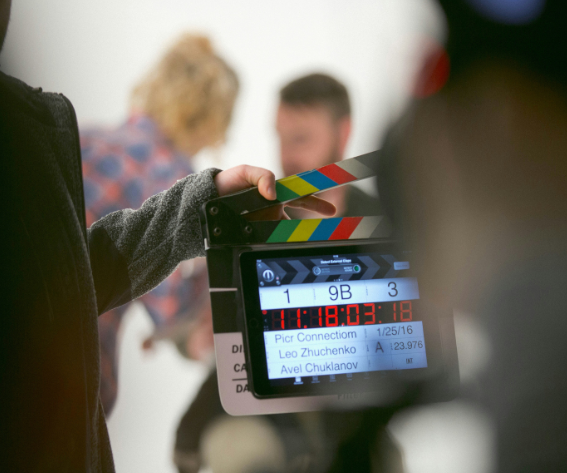
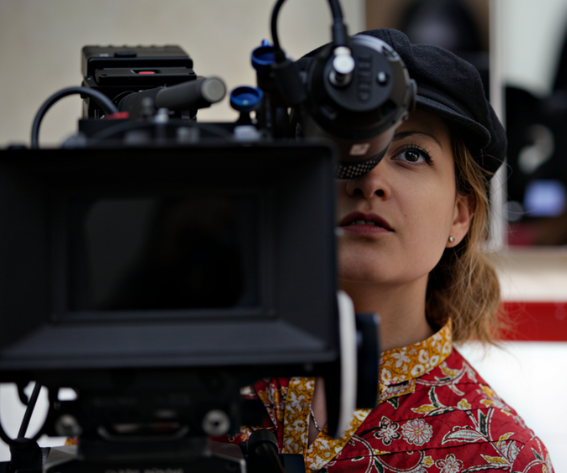
Image source: Avel Chuklanov on Unsplash
You may also like:




Leave a reply