
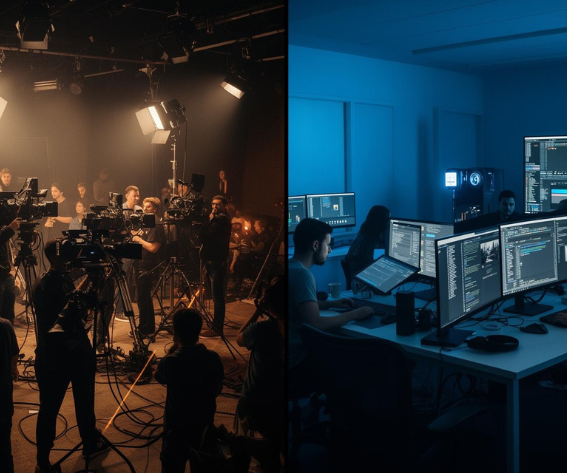
Entertainment has always evolved alongside technology. Film moved from silent pictures to synchronized sound, then to digital effects, streaming platforms, virtual production, and interactive formats. Gaming followed a similar path, developing from simple mechanical systems into online worlds shaped by real-time data and constant user interaction.
Artificial intelligence is now accelerating that evolution. In film, AI can assist with editing, visual effects, localization, audience analysis, and production planning. In interactive entertainment, its role is even broader because the system can respond continuously to how a person behaves.
This is particularly visible in areas such as ai for gambling, where machine-learning models can analyze player behavior, identify patterns of engagement, predict churn, and help platforms understand how different users interact with digital experiences. Although gambling platforms and films serve very different purposes, both increasingly rely on data to understand audiences and improve how content is presented.
Entertainment Is Becoming More Responsive
Traditional cinema is mostly fixed. Every viewer sees the same sequence of scenes, even if their interpretation differs.
Interactive entertainment operates differently. Games, streaming platforms, and online services can respond to individual users in real time. A recommendation engine may highlight different content depending on previous activity, while a game can adapt challenges, rewards, or matchmaking based on behavior.
AI makes these systems significantly more sophisticated.
Instead of relying only on broad categories such as age, location, or previous purchases, machine-learning models can evaluate combinations of signals. Session frequency, preferred content, interaction speed, time spent in particular sections, and changes in behavior can all contribute to a more detailed understanding of engagement.
For creators, this introduces a new possibility: entertainment experiences that are not entirely static but respond to the audience.
Personalization Is Moving Beyond Recommendations
Recommendation algorithms are already familiar from streaming services. Viewers open a platform and see films or television shows selected partly according to their previous activity.
In more interactive environments, personalization can go much further.
A system can determine when a user is becoming less engaged, which formats generate the strongest response, or which parts of an experience are repeatedly ignored. Developers can use this information to adjust interfaces, improve pacing, or redesign features that create unnecessary friction.
Gaming provides a clear example. Developers can analyze millions of sessions to understand where players abandon a level, which mechanics cause frustration, or which content encourages them to return.
The same analytical principles apply across other forms of digital entertainment. The technology is not necessarily changing the fundamental content; it is changing how creators understand audience behavior.
Predicting Engagement Before It Changes
One of the most interesting applications of AI is prediction.
Traditional analytics often tells creators what has already happened. A dashboard can show how many users watched a video, completed a game session, or returned to a platform.
Machine learning attempts to identify what may happen next.
A user who previously interacted every day might gradually reduce session length. Another might stop using features that were once central to their activity. Individually, these changes can look insignificant. Across a large dataset, they may form a recognizable pattern associated with declining engagement.
Predictive models can identify these patterns earlier than conventional reporting.
For entertainment companies, this can influence decisions about content, product design, and user experience. Instead of reacting after audiences leave, creators can investigate potential problems while engagement is still active.
The Creative Limit of Data
There is also a risk in relying too heavily on analytics.
Some of the most memorable films, games, and entertainment formats succeeded precisely because they did something audiences did not expect. If every creative decision is based only on historical behavior, content can become increasingly predictable.
AI is therefore most useful as a tool rather than a substitute for creative judgment.
Data can reveal patterns, but it cannot fully explain why a particular scene resonates emotionally, why an unusual game mechanic becomes popular, or why audiences suddenly embrace a format that previously seemed commercially risky.
The challenge is to combine analytical insight with experimentation.
Privacy Becomes Part of the Design
More sophisticated behavioral analysis also raises questions about privacy.
Interactive platforms can collect large amounts of data about user activity. Companies need to consider how much information is necessary, how long it should be stored, and how clearly its use is communicated.
This issue becomes especially important when systems attempt to predict personal behavior.
Audiences are more likely to accept personalization when it feels useful and transparent. When it becomes intrusive or manipulative, the same technology can undermine trust.
Conclusion
AI is pushing entertainment toward a more responsive model in which platforms can observe, learn from, and react to audience behavior.
Film, gaming, streaming, and other interactive sectors may use the technology differently, but the underlying shift is similar: creators are gaining access to much deeper information about how audiences engage.
The future of entertainment will likely depend on finding the right balance between data-driven personalization and creative unpredictability. AI can help creators understand audiences better, but the strongest experiences will still need something algorithms cannot easily measure: originality.
You may also like:







Leave a reply