
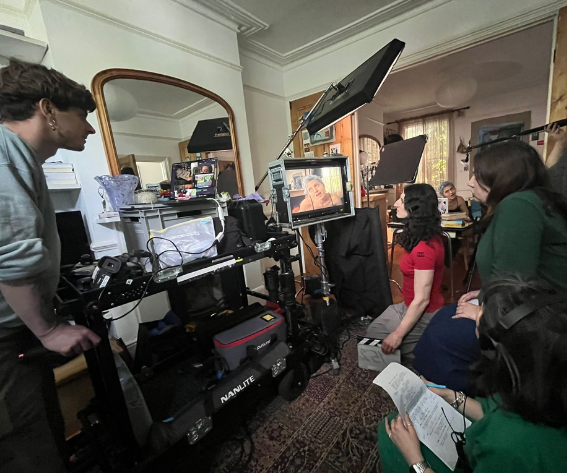
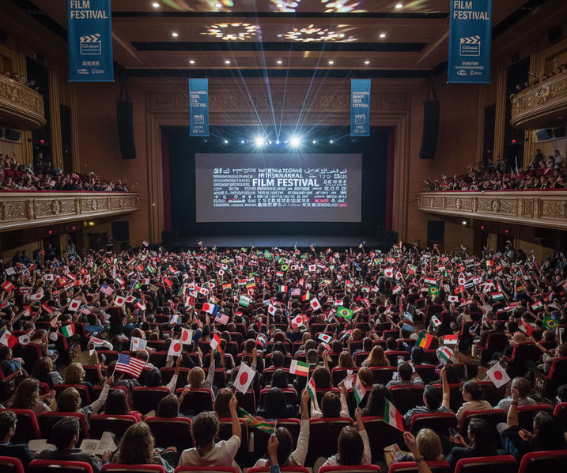
There is something quite special about the hushed silence of a darkened independent cinema just before the projector whirrs to life. Whether you are tucked away in a backstreet theatre in Soho or navigating the bustling crowds at the Raindance Film Festival, that shared sense of anticipation is palpable. We often think of film as a passive experience, something we just sit and watch, but if you have ever spent an hour debating the lighting choices of a fifteen-minute short film over a lukewarm pint in a festival bar, you’ll know it’s anything but.
In recent years, that specific brand of social energy has started to migrate. It has moved from the physical aisles of the cinema into the digital spaces we inhabit every day. We are seeing a fascinating crossover where the visual language of independent film, its pacing, its colour palettes, and its focus on communal storytelling, is being baked into the way we play and interact online. It is no longer just about the “what,” it is about the “how” and the “who” we are sharing the moment with.
The Auteur’s Community: From Festival Bars to Digital Lounges
If you’ve ever attended an indie film festival, you know the real magic often happens in the lobby. It is that “Auteur’s Community” vibe where the barrier between the creator and the audience feels paper thin. Everyone is there because they love the craft, and there’s a distinct social dynamic that forms when people gather around a niche interest.
The transition of these dynamics into digital spaces has been quite a journey. We started with simple forums, but now, the spaces where we congregate online are becoming much more atmospheric. They are trying to replicate that feeling of being “in the know.” Independent film festivals have always relied on this sense of belonging, and digital platforms are taking note. They aren’t just providing a service; they’re building a clubhouse.
Consider how we interact during a live-streamed event or a community gaming session. The chat isn’t just noise; it’s the modern equivalent of the post-screening Q&A. We see this specifically in how certain platforms have evolved.
Cinematic Semiotics in UI: The Art of the Interface
It’s easy to overlook how much the technical side of filmmaking influences the apps and sites we use. When we talk about “cinematic semiotics,” we are really talking about the signs and symbols that tell a story without using words. In a short film, a director doesn’t have two hours to build a world; they have to do it in seconds using lighting, pacing, and colour theory.
Modern interface design has become incredibly savvy at borrowing these tricks. When you enter a high-quality digital environment, the way the screen fades in, the subtle shadows behind the buttons, and the specific hue of the background aren’t accidental. They are designed to evoke a specific mood, much like a cinematographer chooses a lens to create intimacy or distance.
I find it particularly interesting how bingo sites online utilise cinematic colour grading and sound design to mimic the tension found in award-winning short films. Think about the way the soundscape shifts as a game reaches its conclusion. It isn’t just a random collection of beeps; it’s a carefully paced crescendo that mirrors the editing of a suspenseful drama. The use of warm, saturated tones can make a digital space feel like a cosy pub, while cooler, sharper lighting might suggest a sleek, modern environment. These visual cues tell our brains how to feel before we’ve even clicked a button.
The pacing is another carry-over. In indie cinema, the “jump cut” or the “long take” dictates our emotional response. In UI design, the “micro-interaction,” that little animation that happens when you hover over a menu, does the same thing. It keeps us grounded in the story of the interface.
The Narrative of Chance: The “Big Win” as a Storytelling Device
We often view chance as a mathematical concept, but in the world of independent cinema, chance is one of the most powerful narrative tools available. Think of films like Run Lola Run or even the gritty tension of Uncut Gems. These stories aren’t really about the probability of an outcome; they are about the human reaction to a pivotal moment. They are about that “what if” factor.
In indie cinema, the “Big Win” or the “Narrow Miss” is used to reveal character. How does a person act when the odds are against them? How does the atmosphere change when luck suddenly pivots? This narrative of chance is a huge part of why we find digital gaming environments so compelling. It isn’t just about the result; it’s about the story we tell ourselves while we wait for it.
Digital spaces have become masters at framing these moments. They understand that the tension is the point. When you are in a high-stakes digital environment, the interface is essentially acting as the director, cutting between shots to keep your heart rate up. It turns a simple mechanical process into a miniature drama. Many of us have experienced that moment where everything seems to slow down, the “bullet time” of the digital world, where the next few seconds feel like they could go anyway. That is pure cinema, applied to a social, interactive space.
The Future of Interactive Spectatorship: Immersive Social Hubs
So, where is all this heading? We are moving away from the idea of “users” and “players” and towards the idea of “spectator-participants.” The line between watching a film and being in a game is blurring into something entirely new. We are looking at a future where platforms are no longer just places to perform a task, but are immersive, narrative-rich social hubs.
Imagine a space where the community doesn’t just talk about the content but actually influences the environment as they go. We are already seeing the beginnings of this with virtual reality film festivals and interactive documentaries. But even in more traditional spaces, the shift is happening. The social element is becoming the “main character.”
The evolution of bingo sites online is a great example of this trend. They are moving far beyond the old-fashioned image of a quiet hall and turning into vibrant, interactive spectacles. By using cinematic techniques to enhance the social experience, they are creating a form of entertainment that is as much about the “vibe” as it is about the game. It is about creating a space where the narrative is written by the people who are there.
Looking at the way indie film culture has influenced these spaces, it is clear that our desire for authentic, human connection hasn’t changed. We still want to gather together, we still want to be told a story, and we still want to feel that spark of excitement when something unexpected happens. We are just doing it in more creative, visually stunning, and interactive ways than ever before.
The next time you find yourself in a digital lounge or browsing an interactive interface, take a second to look at the lighting. Listen to the way the sound changes when you interact with the screen. You might just find that you’re not just playing a game or scrolling through a site; you’re right in the middle of a carefully choreographed cinematic experience, shared with a community of people who are right there with you, waiting for the next scene to unfold.
You may also like:





Leave a reply