
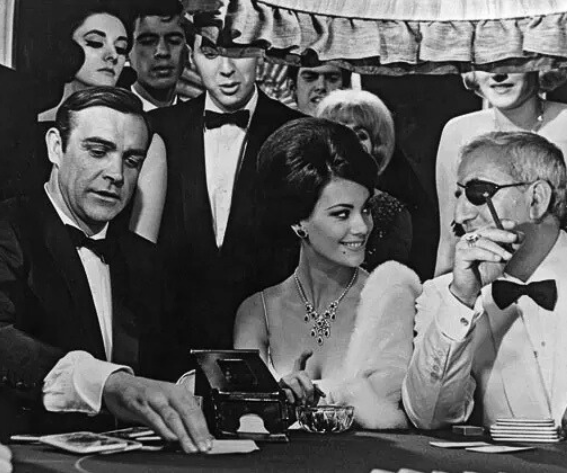
You know that feeling when a scene just clicks? The lights dim, a smoky room, tuxedos brushed sharp, and all you can hear is the shuffle of cards and a whispered bet? That’s baccarat on film and in spy movies, it’s more than a game. It’s a storytelling powerhouse.
Let’s talk about why filmmakers keep bringing these green‑felt tables into spy dramas and thrillers, and why audiences can’t seem to look away.
Style That Speaks Volumes
Think about James Bond’s first moments on screen. In Dr. No (1962), Sean Connery isn’t introduced with guns blazing or cars screeching. He’s at a baccarat table, cool as you like, leaning into the game with that now‑legendary “Bond. James Bond.” line. That simple scene tells us everything: sophistication, confidence, control. It’s not just a prop; it’s a statement about who this guy is.
When a character sits at a baccarat table in a spy film, the audience instantly gets it. They understand the stakes, not just the money on the line, but the tone of the whole story.
A Mirror for Tension
Here’s the thing about baccarat: it unfolds slowly. Unlike explosive action sequences, it’s about pacing: a build‑up that flickers between calm and crisis. That’s exactly what spy films thrive on.
Take GoldenEye (1995), where Bond plays against Xenia Onatopp. This isn’t just about winning chips, it’s psychological warfare. Every glance, every bet tells us something about power dynamics, and the tension doesn’t have to rely on a ticking bomb or a hidden gun. The drama is right there on the felt.
It’s a clever move by directors: you get suspense without spectacle, and that makes each decision feel heavier, more personal.
Baccarat as Character Portrait
You don’t always need dialogue to get to the heart of a character. Sometimes, all you need is the way they play a hand.
In classic Bond films, baccarat isn’t just a game, it’s a measure of cool under fire. Bond’s unshakeable calm at the table becomes a metaphor for how he handles everything else: danger, flirtation, betrayal. Whether he’s flirting with a villainess or quietly sizing up his opponent’s tells, the game becomes a lens into his psychology.
Even when filmmakers bend the trope (like in Rush Hour 3 where Chris Tucker hilariously flails through his baccarat attempt) it still highlights something crucial. In that scene, awkward bluffing and comedic missteps remind us who isn’t in control and that contrast itself becomes meaningful.
More Than Just High Stakes
There’s also an emotional side to it, believe it or not.
In films like The Cooler (though not a spy movie per se), baccarat scenes are quieter but packed with personal meaning: transformation, luck turning around, love opening a character up. While spy films might not focus on romance in the same way, they often use the game to reveal vulnerability or determination behind a façade of stoicism.
That’s exactly why so many writers choose baccarat over other card games. Its simplicity lets them zero in on mood and meaning, without overwhelming the story with rules and jargon. The audience sees the chips go in, the stakes rise and they feel it. It’s subtle, yet rich with possibility.
The Luxury Factor
Let’s be real, part of why baccarat works is pure aesthetics. Spy films sell us fantasies of sophisticated danger, and nothing screams “sophistication” quite like baccarat in Monte Carlo or Macau.
Baccarat developed its association with luxury and sophistication among French nobility, and that cultural baggage does heavy lifting for filmmakers. The moment characters sit at a baccarat table, we’re transported into a world of wealth, power, and exclusivity. That same mystique continues today through technology. By offering live dealer variants that mimic the real-life experience, platforms like Betinia New Jersey allow players to tap into that high-roller glamour that Bond made iconic decades ago.
The tuxedos, the champagne, the ornate casino architecture, these elements create visual shorthand that establishes tone instantly. We understand the stakes are high because everything about the setting screams “money matters here”.
So, What’s the Takeaway?
Why does baccarat work so well as a narrative device in spy films? Because it’s:
- Elegant and symbolic – it says a lot without relying on flashbulbs or explosions.
- Perfect for tension – slow build, high stakes, dramatic payoffs.
- A character mirror – how someone plays tells us who they are.
- Culturally rich – tied to wealth, sophistication, and mystery.
And, you know, sometimes it’s just fun to watch a spy go head‑to‑head with a villain over cards instead of guns.
You may also like:




Leave a reply