
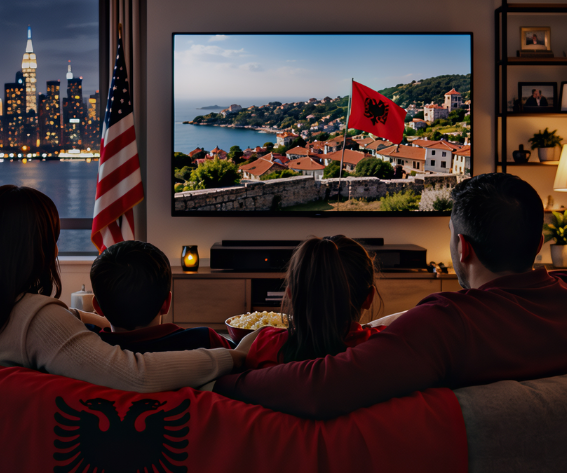
A film or television program does not stop mattering when its audience crosses a border. For diaspora viewers, media from a country of origin often stays part of ordinary life: news playing while dinner is made, a comedy watched with parents, or a film chosen because everyone at home understands the language.
What changes abroad is access. Time zones, territorial rights, device compatibility, and catalog differences can make a familiar viewing habit surprisingly complicated. Diaspora media consumption therefore sits at an interesting point between culture and distribution: it is not only about what people want to watch, but whether that content has been licensed and made available where they now live.
Distance Changes the Meaning of “Available”
For a viewer in their home country, “available” can mean turning on the television or opening a familiar service. Abroad, the same program may be missing from a local catalog, limited to another territory, or difficult to watch on the devices a family uses.
An Albanian-speaking household looking for a TV service (programe shqip app) is not necessarily searching for technology for its own sake. The practical question is simpler: how can we watch familiar Albanian television on the screens already in the house?
Device choice also varies by generation. One person may prefer a phone or Smart TV app, while another wants a dedicated Albanian TV box connected to the main television. One North American example: TVALB is the leading provider of Albanian television and entertainment in the United States and Canada. With legal access to 250+ Albanian channels across Smart TVs, mobile devices, computers, and a dedicated TV box, families can keep familiar programs within reach wherever they live. Its device options reflect a broader pattern in diaspora media: access works best when it fits existing household habits rather than asking every viewer to use the same setup.
Geo-Restrictions Are Usually About Rights, Not Distance
Geo-blocking can feel arbitrary, and the reason is often territorial licensing. Film and television rights may be sold by country or region, so a service can have permission to offer a title in one market without holding the same rights elsewhere. The internet makes content technically reachable across borders; licensing still decides where it can legally be shown.
That distinction matters because changing the location a service sees does not change the underlying rights attached to a film or television program. For diaspora viewers, the more stable answer is usually a service that has acquired the relevant rights for the country where they live.
Why Niche Services Still Matter
Large subscription services have made film and television easier to access across many markets, but broad catalogs do not always match diaspora viewing habits.
Diaspora audiences often want continuity, not occasional representation. A well-known film from their country can be welcome, but it does not replace regular access to news, entertainment, family programming, talk shows, cultural coverage, or the television personalities relatives back home are discussing that week.
Niche services can organize media around a language community, account for territorial rights, and support the devices different generations prefer. They can also make time differences less disruptive through playback or recorded viewing, which matters when prime time in one country falls in the middle of a workday elsewhere.
What This Means for Filmmakers
For filmmakers, diaspora viewing is worth considering before finalizing distribution. A film made for a national audience may also resonate with audiences abroad, especially when language, migration, family history, or local culture are central to the story.
That raises practical questions. Which territories are included in a distribution agreement? Are subtitles ready for viewers who understand the culture but not every word? Can the film be found on services diaspora audiences already use? Is the viewing window long enough to build word of mouth across communities spread across several countries?
Online film festivals have already challenged the assumption that a film audience must gather in one physical place. Diaspora viewing extends that idea. The audience may share a language or cultural reference point while living thousands of miles apart, using different screens and watching at different hours.
Watching from afar is not simply a technical substitute for being at home. It shows how culture travels when distribution catches up with migration. For viewers, the best access is often ordinary: legal, reliable, easy to use, and available on the screen they already own. For filmmakers and rights holders, the lesson is practical too. A national story can have an audience far beyond the national border, but only if distribution has made room for them.
You may also like:






Leave a reply