What you communicate before an actor steps into the booth often decides whether a remote performance works, and that burden doubles when you're also the one casting and cutting the final sound. Distance itself isn't the danger. You can cast from anywhere. The real hazards are subtler: vague direction that pulls an actor into the wrong emotional turn, or a usage dispute that stalls delivery of a 90-second trailer narration and turns an appealing audition into something you can't use.
Build a casting brief actors can perform
Define the performance before describing the voice
Age range and accent tell an actor what a voice sounds like, nothing more. Start with an objective and a listener, then lay out the emotional turn and where it sits in the scene. "Conceal concern from a younger sibling" gives an actor something to do; "sound cinematic" gives them nothing at all. Pick a short audition extract with a tonal shift in it, something like reassurance cracking into impatience.
Skip the full script when auditioning. Do supply pronunciation notes and content warnings. And before the audition deadline, say whether a reference clip demonstrates pacing, emotional intensity, or both.
Put production terms where actors can see them
Brief field
What the filmmaker should specify
Role and performance
Character context and audience; tone and accent; required pronunciation
Deliverables
Estimated word count and file count; required takes; pickup expectations
Recording setup
Live or asynchronous direction; connection method; reference files
Schedule
Audition deadline and session window; delivery date; pickup availability
Compensation
Session fee and usage fee; payment timing; revision charges
Usage
Media and territory; term and exclusivity; editing permission; reuse limits
Keep actor-error pickups in a different bucket from rewrites or changes in direction. Work out the correction window and any fees for each category before you book anyone. A mispronounced name is one thing; paying for dialogue you rewrote is another.
What performers need to know about voice over jobs
Make the opportunity assessable
Actors skimming voice over jobs are deciding, in under a minute, whether the posting is worth their studio time. The things they weigh are concrete: deliverables, session schedule, pay, and which usage rights they'd be granting. Put those details in the posting itself. If the role spans six animated episodes, disclose the recurring session commitments up front rather than treating each episode as some unspecified booking down the line.
Answer career questions without derailing the guide
Plenty of newcomers land entry-level voice roles with no credits behind them, provided the audition meets your performance and technical bar. Don't drop that bar just to fill a vacancy. New commercial actors can begin with acting practice, a focused demo, and a dependable recording space. Write audition instructions so someone submitting their very first paid job can follow them.
Voice acting can pay the bills, though income hinges on how often you book, at what rates, and how reuse is permitted. Netflix casting is production-specific: applicants without experience must still meet that production's requirements, and applying guarantees nothing. Judge the audition performance, not the credit list.
Show demand without promising easy employment
NAVA shared the 2024 State of Voiceover survey, which drew 1,798 actor responses. Audiobook narration ranked third among respondents' reported genres. Those findings describe an established field spanning multiple formats, not guaranteed income or a count of vacancies waiting for an actor's next booking.
NAVA shared the 2024 State of Voiceover survey, which drew 1,798 actor responses. Source: navavoices.org.
Evaluate auditions for performance and production fit
Listen twice for different reasons
Listen first for believable character choices and timing, and assess how well the actor responds to your brief. Use two distinct listening passes. On the second pass, listen for room noise and reflections, then check for clipping, mouth noise, and inconsistent microphone distance.
Processing won't repair an unsuitable performance or reliably hide a poor room. Ask finalists for one adjustment: reduce the pace while preserving urgency. Their response reveals more about directability than several nearly identical takes. Compare how each actor handles the same beat, such as a whispered warning before a door opens.
Adapt the audition to the film's format
Test animation voices for repeatability without demanding painful effort. For dubbing and replacement dialogue, supply a picture reference with timing cues so the audition can match the visible action.
Format
Audition priority
Delivery risk to test
Animation
Character consistency and reaction sounds
Voice strain across repeated takes
Narration
Listener connection and sustainable pacing
Inconsistent tone across long passages
Dubbing
Emotional match within timing limits
Lines that fit literally but miss visible action
Dialogue replacement
Match to the original actor and scene energy
Poor synchronization with mouth movement or physical effort
Vocal pace and intensity should support your cinematic technique choices, matching the framing and cutting rhythm while respecting the scene's visual perspective, particularly in an intimate close-up.
Direct the remote recording without crowding the actor
Choose live direction or asynchronous recording
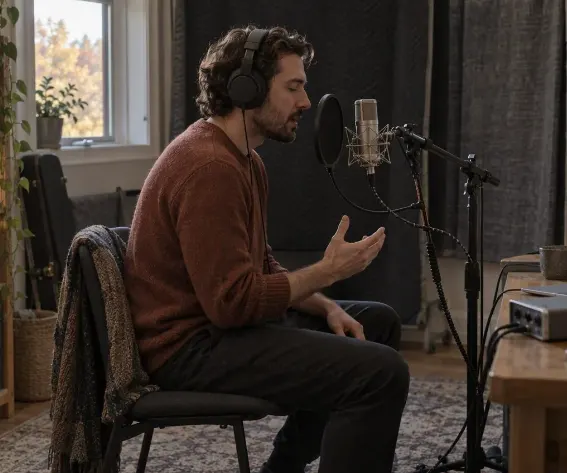
Choose live direction for emotionally complex scenes or ensemble timing. Dialogue replacement also benefits from immediate correction against picture. Asynchronous recording suits straightforward narration when you provide marked scripts and pronunciation references, with explicit take requirements. Schedule convenience shouldn't determine how you record a scene that needs repeated adjustments to align a breath with an on-screen gesture.
Run a live session in a usable sequence
Confirm the connection and recording format, then verify a backup recording before the first take.
Record a short level check using the scene's loudest anticipated delivery.
Let the actor complete a full take before giving notes.
Give one playable adjustment at a time and identify the line or beat it affects.
Capture a safety take plus isolated efforts or alternate pronunciations.
Confirm the file-transfer method and pickup deadline before disconnecting.
The call carries direction and provides a listening feed, not a master. Have the actor record a local high-resolution file instead of relying on compressed call audio, and confirm that the local recorder is running before each take.
Give notes the actor can execute
Give intention and circumstance instead of a line reading whenever possible. "Keep the secret from him until the final phrase" offers an action; "say it like me" supplies an imitation target. Tie each note to a beat, such as the moment the character notices blood on a sleeve.
Log the selected take under its recording name: Scene12_Line04_Take03.
Approve the performance, files, and rights together
Review the master before approving the job
Listen to the complete master against the approved script, not merely the audition excerpt. Check synchronization and pronunciation. Then hunt for missing words and audible edits, and inspect noise and clipping separately. Confirm file names and sample rate based on your editor's actual workflow rather than imposing a universal specification.
Import a test file into the edit before final approval. Check for drift and channel-routing errors at the intended timeline position. For three lines of replacement dialogue, compare entrances and physical effort against the picture before approving Scene12_ADR_Master.wav.
Close the contract gaps before reuse
Approval means accepting the performance and confirming that the licensed use matches the release. Check the permitted media and territory against the agreement, along with its duration and exclusivity. Confirm payment and revision terms, plus permission for reuse or adaptation beyond the original film.
Union agreements differ by production. If one may apply, consult the SAG-AFTRA contracts resource as a starting point and confirm the applicable terms with the union or a qualified adviser before signing your session contract.
The contract should expressly describe any synthetic or adapted voice use, and both parties should agree to it rather than assume general recording permission covers it. This includes voice work generated or altered with artificial intelligence, which is simply another usage category to name in the contract. Specify the proposed application and consent terms. If you later want a different use, obtain agreement before authorizing it.
A remote workflow that protects the final cut
Remote casting works when you treat it as a production workflow rather than an audition posted online. Your brief determines who applies, and your direction shapes the performance. Approval connects that work to both the edit and the agreed release. With those decisions settled, the handoff is tangible: your editor places clearly named, contract-ready master files on the film's final timeline.
The TMFF newsletter
Monthly winners, new reviews and festival news, once a month. No spam.
War films and Call of Duty have always shared a visual language, from the shaky camerawork and deafening explosions to the tense moments when soldiers move through unfamiliar territory, unsure of what awaits them. Over m
Childhood and caregiving have inspired some of cinema's most emotionally powerful stories. From intimate family dramas to coming-of-age films, filmmakers frequently explore how children develop relationships with parents
Space has always fascinated humanity. The thought of traveling beyond Earth, exploring distant planets, and discovering the mysteries of the universe has inspired countless stories. Cinema has played a major role in turn





Comments