
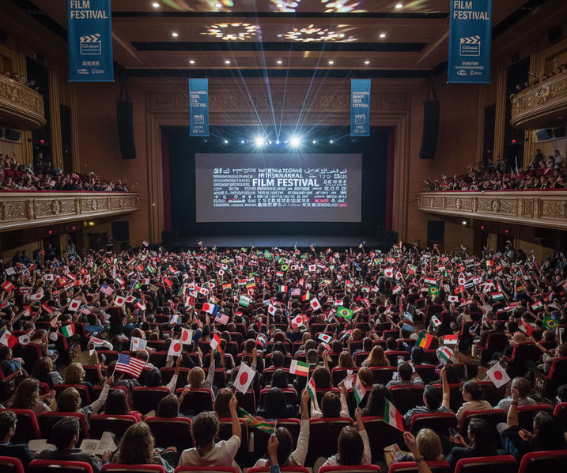
A great film can tell a story without saying a word, but to get its message across to audiences outside of a country, it often requires more than just a good story. A filmmaker might make a hard-hitting film for one market and find that audiences elsewhere respond differently to it because of language, cultural references, humor, or even how certain scenes are interpreted.
Streaming platforms, digital distribution, and social media make it easier than ever for filmmakers to take their stories out of their home markets. But addressing a global audience takes more than just translating the dialogue. It’s about localization done right, adapting to the culture, making it accessible, and understanding how viewers in different markets consume content.
This junction of filmmaking and localization has become an important factor in making video content travel across languages and cultures for media companies and language service providers such as Naarg Data Media Services.
So how can filmmakers adapt their work for global audiences without losing the special elements of the original story? Here are some practical approaches.
Think Globally in the Planning Stage
Think of globalization from the first moment you think of a film. If you’re distributing to international audiences as part of your strategy, it’s worth thinking about them in pre-production.
This doesn’t mean you have to change your story to make everyone happy. Instead, think of things that could be problematic in localization. Are there culturally specific jokes? Is there a lot of wordplay in the story? What about the scenes where the dialogue is more meaningful than what you see?
Understanding these elements early on gives filmmakers more flexibility in adapting the finished film to different markets.
Research Your Target Global Markets
Before adapting a film for an international audience, filmmakers must know where their content is going and for whom they are making it. Different markets can have very different viewing preferences, language requirements, cultural expectations and content consumption habits.
First, determine the countries or regions where the film has the most potential. Consider things like the popularity of your genre, existing interest from your audience, preferred languages, streaming trends, and distribution opportunities. For example, a film intended for a Japanese audience might need a very different approach to localization than one intended for a Brazilian or German audience.
Market research can also help filmmakers determine whether it would be better to have a particular audience see a film with subtitles, dubbing, or both. It can also highlight cultural references that might need more context or help identify terminology that should be adapted instead of translated literally.
The point is, you’re not changing the movie to suit every market. However, understanding your target audiences will allow you to make more intelligent localization decisions while preserving the original story and creative vision.
Make Dialogue Localization Friendly
One of the biggest challenges when a film crosses languages is the dialogue.
A phrase that sounds natural in English can become clumsy when translated literally. Idioms, slang, sarcasm, jokes, and cultural references may have no meaning at all.
Clear scripts and dialogue lists during production can make this easier for filmmakers. Accurate records of dialogue, character names, scene descriptions, and context allow translators and localization teams to understand what a character actually means, not just what they literally said. This is especially true when humor, emotion, or cultural context are the drivers of the story.
Expand Your Reach with Subtitles
One of the easiest ways to make a film accessible to those who don’t speak the original language is usually to subtitle it.
But good subtitles are more than simply translating dialogue from one language into another. Captions have to be legible, timed to the action, and short enough for the viewer to be able to keep up without missing what is happening on screen.
Subtitles should also be a consideration for filmmakers targeting audiences speaking different languages or for those who are deaf or hard of hearing. Captions for accessibility may include relevant information about music, sound effects, or off-screen dialogue as appropriate to the target market and distribution platform.
A well-produced subtitle track allows the audience to experience the original performances and still understand the story. For a deeper look at how multilingual subtitling can help video content reach audiences across borders, filmmakers can explore this guide to multilingual subtitling.
Think about dubbing for important markets
Dubbing can make content more natural and accessible to markets where viewers prefer localized audio, while subtitles work well for many audiences.
Dubbing is the art of replacing the original dialogue with recorded performances in another language. It’s not just translating a script. Voice actors are responsible for capturing the personality, emotion, timing, and intent of the original performance.
Good dubbing should feel like it’s part of the film and not an added layer. This makes casting, voice direction, adaptation, and audio production especially important.
Deciding which territories would be best served by dubbed versions is an important part of the distribution strategy for filmmakers who want to reach multiple international markets.
Be Aware of Cultural Context
Localization is more than just language. Culture can be just as important in a film’s reception.
A gesture, symbol, joke, product reference, or social custom that seems perfectly normal in one country may mean something else somewhere else. Even colors, names, references to food, and humor can have cultural connotations that may not be immediately obvious to international audiences.
This doesn’t mean filmmakers have to get rid of every culturally specific element from their stories. Indeed, cultural authenticity is often one of the elements that make films interesting for global audiences.
Instead, the goal should be to learn how these elements can be interpreted and to adapt supporting content accordingly.
Localize Your Film’s Marketing and Promotional Content
There’s one thing to make a film available, and another thing to get audiences engaged with it. When a film is ready to be released to the rest of the world, promotional material has to be adapted for each market.
You may need to localize trailers, posters, film descriptions, taglines, social media campaigns, websites, press releases and promotional videos. Word-for-word translations of these materials can result in messaging that sounds unnatural or doesn’t resonate the same way in another language.
Even the simplest elements like a film’s title or tagline can require careful consideration. A phrase that sounds good in the original may not have the same emotional or cultural resonance elsewhere. Promotional imagery and references should also be checked to see if they appeal the right way to the target audience.
Localized marketing gives filmmakers and distributors the opportunity to reach audiences in a familiar way, while still maintaining the film’s original identity. Since the promotional experience is as organic as the viewing experience, audiences are more inclined to connect with the film before they even press “play.”
Incorporate Global Accessibility into Your Distribution Strategy
International versions of a film shouldn’t be created after the distribution plans are set in stone.
Filmmakers can be proactive in knowing their target markets, being aware of language needs, preparing clean master files, keeping accurate scripts, budgeting for subtitling, dubbing, accessibility, and promotional localization. This can make it a lot easier to distribute internationally.
More importantly, it changes the paradigm from “How do we translate this film? to “How do we let audiences experience this story in various markets?”
The Goal Isn’t to Make Every Film Universal
Making content for global audiences does not mean that every film has to be culturally neutral. The very uniqueness of a film’s setting, language, traditions, humor, and perspective may be precisely what makes it attractive to viewers elsewhere. The point is not to eliminate those qualities, but to explain and make them accessible.
With careful localization, quality subtitles and dubbing, culturally sensitive marketing, and the right technology to reach audiences far beyond their home markets, filmmakers can preserve the soul of their original work.
As the global media landscape continues to grow, the art of marrying great storytelling with thoughtful language and cultural adaptation will be increasingly valuable to filmmakers, studios, and the teams that help deliver their content to global audiences.
Next-generation filmmaking isn’t just about stories that travel. It’s about making those stories feel at home, wherever they are watched.
Image source: TasteRay
You may also like:






Leave a reply