
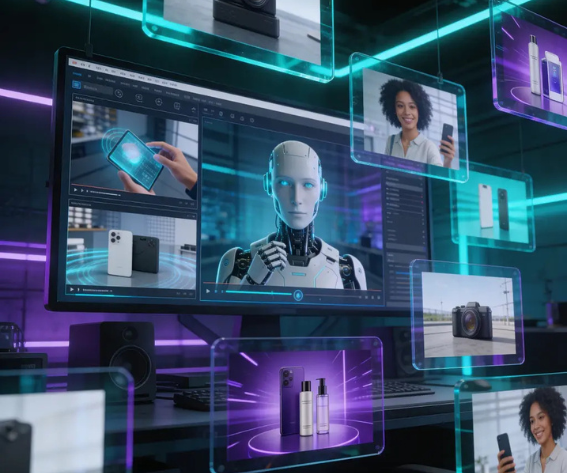
A film rarely begins with a finished picture in someone’s head. More often, it starts with a scene, a line of dialogue, a mood, a character, or a question about what might happen if an idea were taken in a certain direction. Turning that first thought into something a whole production team can understand is not always easy.
An AI Video Generator can be useful at this early stage, with Higgsfield helping filmmakers visualise ideas and experiment with different creative directions. Rather than explaining a scene entirely through words, a director can create a rough visual version and assess the mood, camera movement, composition and pacing. The result is not intended to replace the finished production. Instead, it can give the creative team something tangible to review, discuss and refine before filming begins.
For independent filmmakers especially, this can be useful when time, equipment or production resources are limited. A rough experiment may help a filmmaker decide which ideas deserve further development before cameras, locations and crew become involved.
The technology is therefore most interesting when it supports the thinking that happens before production rather than trying to replace the filmmaking process itself.
Giving a Story Idea a More Concrete Shape
One of the hardest parts of pre-production is explaining an idea that does not yet have a physical form. A filmmaker might know that a scene should feel tense, quiet and slightly unsettling, but those words can mean different things to different members of a crew.
An AI Video Generator can help turn that description into an early visual reference. The result might not match the filmmaker’s intention perfectly, but it can reveal useful details. Perhaps the camera feels too close. Maybe the setting looks too bright. The movement might be more dramatic than intended.
Those differences are not necessarily failures. They give the filmmaker something to respond to. This can be particularly helpful when discussing a project with a cinematographer, production designer or editor. Rather than trying to explain every visual decision verbally, the filmmaker can show a rough direction and then discuss what should change.
The technology can also encourage experimentation. A filmmaker who has only imagined one version of a scene can explore a quieter interpretation, a wider composition or a different visual mood without arranging a full shoot for every possibility.
Higgsfield can fit naturally into this exploratory stage. It can be used as one of the tools for testing visual possibilities while the filmmaker is still deciding what the project should feel like. The important distinction is that the generated material is reference material, not a production blueprint.
Exploring Scenes Before the Crew Arrives
Pre-production is full of decisions that can become expensive once filming starts. A location may not work as expected. A particular camera movement may require equipment that is unavailable. A scene that sounded simple on paper may turn out to be difficult to stage.
An AI Video Generator can give filmmakers a low cost way to think through some of these questions before the shoot. Consider a short film that includes a character walking through an empty industrial building at night. The filmmaker may be considering several approaches. The character could be followed from behind, shown in a wide frame or introduced through a slow movement from an empty corridor.
A generated clip cannot tell the filmmaker which option is best. But it can make the alternatives easier to compare.
The filmmaker can ask what creates the strongest sense of tension. Does the empty space feel important? Is the character too visible? Does the camera movement reveal too much too early? These are filmmaking questions and that is where the real value lies. The technology simply makes it easier to test the questions visually.
Higgsfield may be useful here when a filmmaker wants to explore movement and atmosphere before committing to a real setup. A rough visual can help start a conversation about blocking, framing and the relationship between the camera and the subject.
There is also value for smaller productions. An independent filmmaker may not have the budget to test several lighting or staging approaches on location. A visual experiment can help narrow the choices before production day. That does not remove the need for proper planning. It can simply make that planning more informed.
From Storyboard Thinking to Visual References
Traditional storyboards remain extremely useful. They give directors and crews a shared understanding of shots, compositions and scene progression.
But not every filmmaker is comfortable drawing. An AI Video Generator can provide another way to explore a sequence when a filmmaker has difficulty expressing an idea through sketches. A generated sequence can suggest how a scene might move from one moment to another, even if the final production will look completely different.
This can be especially useful for action, movement and atmosphere. Imagine a scene in which a cyclist travels through a crowded street before turning into a quiet side road. A written description can explain the action, but it does not necessarily communicate the intended rhythm. A rough moving reference can make the idea easier to discuss.
Higgsfield AI creative suits can be considered as part of that wider experimentation process when filmmakers want to investigate different visual directions. The goal should still be to clarify the story rather than to produce something impressive simply because the software can generate it.
A generated sequence might also expose a storytelling problem. Perhaps too much action happens in one shot. Maybe the transition between locations is confusing. Perhaps the viewer needs a stronger visual cue before the character changes direction.
Finding those problems early is valuable. It is much easier to change an idea while it is still in a planning stage than after the crew has spent a day filming it.
What Filmmakers Should Not Expect From Generated Video
There is a temptation to treat generated footage as if it were a reliable preview of the finished film. That would be a mistake. An AI Video Generator may create attractive movement while getting important details wrong. A character’s appearance can change between shots. Objects may behave strangely. Hands, faces, backgrounds or physical interactions may not remain consistent. The movement of a camera may also look convincing without being practical to reproduce with the equipment available to the production.
There is another issue: storytelling. A visually impressive clip is not automatically a useful filmmaking idea. A scene can look cinematic while having no dramatic purpose. A beautiful camera movement can distract from a weak character moment. A striking environment can add nothing to the story.
Filmmakers therefore need to judge generated material according to the same principles they apply to other creative references.
- Does it support the story?
- Does it communicate the character’s intention?
- Does it create the right emotional response?
- Does it help explain the scene to the people who need to make it?
- If the answer is no, there is little reason to keep it simply because it looks good.
Higgsfield should be treated with the same perspective. It can help with visual exploration, but it cannot decide whether a scene belongs in a film or whether an idea works dramatically. That decision still belongs to the filmmaker.
Keeping the Human Direction at the Centre
The strongest use of an AI Video Generator is not to remove creative decisions from the filmmaker. It is to give those decisions something to work against.
- A director can look at an early result and say, “This is too dark.”
- A cinematographer might respond, “The wider frame gives us more of the environment.”
- A production designer might notice that the setting does not fit the period.
- An editor might suggest that the scene needs fewer visual beats.
These conversations are much more valuable than simply asking whether the generated clip looks realistic. The technology can also help when a filmmaker is working alone. Independent creators often have to move between writing, directing, producing and planning. A rough visual reference can help them test an idea before asking other people to become involved.
But human experience remains essential. A filmmaker knows the emotional reason behind a scene. They understand the character’s history and the story’s larger arc. They know what can realistically be achieved with the available crew, location and budget.
The tool does not know those things automatically. That is why an AI Video Generator works best as an extension of the planning process rather than a replacement for it.
Using AI Without Losing the Reality of Production
There is a useful balance between imagination and practicality. During early development, filmmakers should have room to explore. At the same time, every production eventually has to deal with real constraints.
A generated shot might show a camera travelling smoothly through a crowded room. In practice, there may be no space for a dolly. A concept might place a character on a rooftop that cannot safely be accessed. A night scene may look simple until the lighting requirements are considered.
The purpose of an AI Video Generator is not to hide these constraints. Instead, it can help filmmakers identify which creative choices need further planning.
After exploring an idea, the filmmaker can translate the useful parts into a practical production plan. That might involve a shot list, storyboard, location check, lighting plan, blocking rehearsal or conversation with the cinematographer.
Higgsfield can support the first part of that journey, but the later stages still depend on people, equipment, locations and production experience.
This is particularly important for independent filmmakers. Limited resources make preparation even more valuable. The more clearly a team understands what it wants before a shoot, the easier it becomes to decide where money, time and effort should be spent. AI does not remove that responsibility. It can make some parts of the preparation easier.
A Better Way to Think About AI in Pre-Production
The most useful mindset is to treat generated video as a form of visual questioning.
Instead of asking, “Can this tool make my film for me?” ask:
“What can I learn about my film by seeing a rough version of this idea?”
That question leads to better results.
A filmmaker might discover that a scene needs more space, that a character should enter later, that a location should feel more isolated or that a particular visual style does not suit the story. An AI Video Generator can help make those discoveries earlier.
The process can be informal. A filmmaker does not need to generate an entire film or create polished sequences for every scene. A few carefully chosen experiments may be enough to settle a creative question.
Higgsfield can be one option for those experiments, particularly when the filmmaker wants to investigate different visual treatments before moving into traditional pre-production work.
The key is knowing when to stop experimenting. Once the creative direction becomes clear, the team should move toward concrete production decisions. The generated material has done its job.
Final Thoughts
When an AI Video Generator isn’t used to replace filmmaking, but rather to help explore your video ideas, it can be a helpful tool in the pre-production phase.
It can assist you to transform an abstract shot into a visual guide, compare options for a particular shot, interact with production team members and identify issues prior to shooting.
Doing this doesn’t mean that the shooting is finished and can be called a shooting plan. Can include odd details, unreasonable motions and concepts difficult to portray using actual gear. Most crucially, it doesn’t know the emotional purpose of the narrative like the author does.
Higgsfield can be a good support in that initial creative process, inspiring film makers to think about options before deciding on the practical.
The simple rule is: think freely, try out ideas in a pictorial form, challenge the outcomes and then take the best ideas into a real production process.
Image source: Z-image
You may also like:




Leave a reply