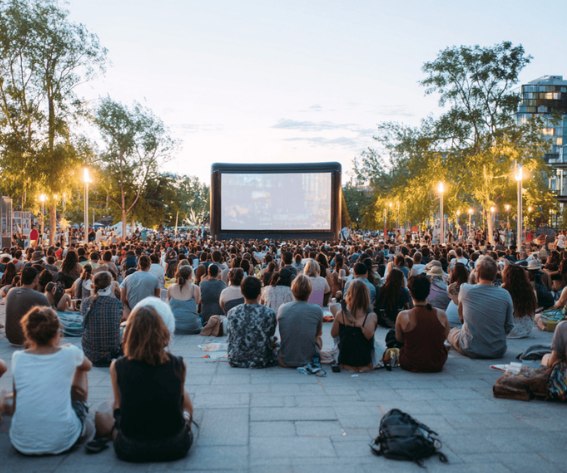
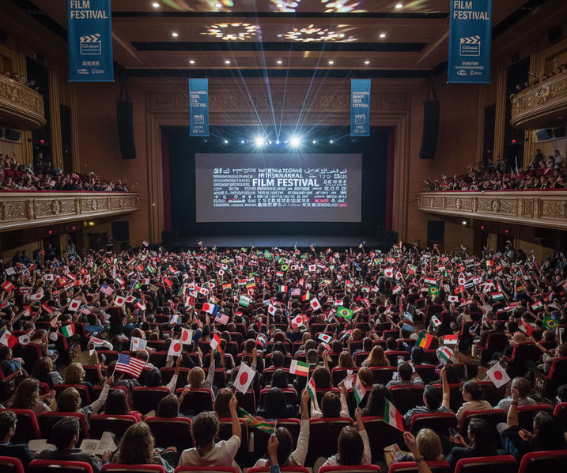
Large film festivals are not just entertainment events anymore. They are high-pressure public gatherings with celebrities, VIP guests, press teams, production crews, sponsors, vendors, and thousands of attendees moving across multiple venues at the same time.
The scale is huge. The Cannes Film Festival welcomes around 35,000 to 40,000 festivalgoers every year, while the Toronto International Film Festival screens 300 to 400 films and draws average attendance of more than 250,000 people. That means security teams are not only protecting people. They are also managing crowd flow, VIP access, restricted zones, expensive equipment, emergency response, and real-time incident detection.
The problem is that traditional CCTV was not built for this level of complexity. It records footage, but it does not understand what is happening. Even worse, studies on live monitoring show that after around 20 minutes, operators can miss up to 95% of screen activity.
That is where AI camera systems are changing film festival security.
Instead of waiting for incidents to be discovered later, AI systems analyze live video, detect suspicious patterns, send real-time alerts, and help teams respond before small issues become major disruptions.
1. Real-Time Crowd Monitoring Helps Prevent Dangerous Congestion
Crowd control is one of the biggest security challenges at large film festivals.
A festival may have red carpet arrivals, screening queues, press zones, fan barricades, VIP entrances, and public walkways all active at the same time. One delayed screening or celebrity appearance can quickly shift crowd movement and create pressure at entrances or narrow corridors.
AI camera systems help security teams monitor crowd density in real time.
They can detect:
- Overcrowding near entrances
- Long queue buildup
- Sudden crowd movement
- Blocked walkways
- Unusual gathering patterns
This matters because crowd issues usually start small.
A queue becomes a bottleneck.
A bottleneck becomes pushing.
Pushing becomes a safety risk.
With traditional CCTV, a guard may only notice the issue after it becomes visible on one screen. With AI-powered monitoring, the system can flag unusual density or movement patterns instantly.
This gives festival teams time to redirect foot traffic, open another entry lane, deploy staff, or pause movement before the situation escalates.
For example, if a popular premiere causes a crowd to gather outside one theater, AI cameras can alert the command center that the crowd has exceeded a safe threshold. The team can then send staff to guide attendees to alternate access points.
This is especially valuable at festivals spread across multiple buildings. Security managers cannot physically watch every location at once. AI gives them a live layer of intelligence across the full event footprint.
2. AI Detects Suspicious Behavior Before It Escalates
Suspicious activity at film festivals does not always look obvious at first.
A person standing near a VIP entrance may be harmless. But if they stay there too long, avoid staff, and repeatedly check access points, that behavior may need attention.
AI camera systems are designed to identify these patterns.
They can detect behaviors such as:
- Loitering near restricted areas
- Repeated movement around security checkpoints
- Tailgating behind authorized staff
- Running in controlled zones
- Unauthorized entry attempts
- People entering closed areas after hours
This is where AI becomes much more useful than basic motion detection. A traditional motion camera may alert every time someone walks past. AI looks at context.
It asks:
- Is this person supposed to be here?
- Are they staying longer than normal?
- Are they moving in an unusual way?
- Are they entering an area they should not access?
For example, Coram’s AI camera system can work with existing IP cameras and add intelligent features such as real-time alerts, AI-powered video search, people and vehicle detection, and centralized cloud-based video management. For a film festival, this means security teams can receive instant alerts for suspicious activity, search footage faster, and monitor multiple camera feeds without manually scanning hours of video.
That makes a major difference during busy events.
Instead of depending only on human attention, teams get AI-assisted detection. The system highlights what needs review, while staff focus on response.
3. Smart Access Control Protects VIPs, Celebrities, and Restricted Areas
Large film festivals have many restricted zones.
These may include:
- VIP lounges
- Green rooms
- Red carpet staging areas
- Press-only sections
- Projection rooms
- Equipment storage spaces
- Staff-only corridors
- Backstage entrances
These areas need stronger protection because they often involve celebrities, unreleased films, confidential materials, and expensive production equipment.
AI camera systems improve access control by adding visual intelligence.
They can monitor:
- Who enters restricted areas
- Whether someone follows an authorized person inside
- Whether access happens outside approved hours
- Whether a door is left open
- Whether a crowd forms near a secure entrance
This is important because access control systems alone are not always enough.
A badge system may confirm that one person entered. But it may not detect if another person slipped in behind them. This is known as tailgating, and it is a common security weakness in event environments.
AI cameras help close that gap.
They provide video verification around access points and alert security when movement does not match expected behavior.
For example, if a staff member opens a backstage door and two unauthorized people follow closely behind, the system can flag the incident immediately.
This helps protect talent, staff, intellectual property, and event operations.
At major festivals, where VIP movement is constant and media attention is intense, this level of visibility is critical.
4. Faster Emergency Response Saves Critical Minutes
Emergencies at film festivals can happen without warning.
They may include:
- Medical incidents
- Crowd surges
- Fights or aggressive behavior
- Fire alarms
- Suspicious packages
- Power disruptions
- Weather-related incidents
- Evacuation needs
In these moments, speed matters.
AI camera systems help by identifying incidents faster and sending alerts to the right teams. Instead of waiting for someone to report a problem, the system can detect unusual movement, sudden crowd reactions, or people gathering around an incident area.
This gives security teams live situational awareness.
They can see:
- Where the incident is happening
- How many people are nearby
- Whether the crowd is moving safely
- Which entry or exit points are available
- Whether emergency staff need a clear path
Real-world events show why this matters. During Cannes in 2025, a power outage disrupted parts of the festival area and affected screenings, while the main festival venue had to rely on independent power to continue key events. Large festivals need fast coordination when infrastructure issues occur.
AI cameras cannot prevent every emergency, but they can help teams see what is happening faster.
5. AI Helps Prevent Theft of Equipment and High-Value Assets
Film festivals often involve expensive equipment.
This includes:
- Cameras
- Lighting gear
- Sound systems
- Projection equipment
- Laptops
- Media drives
- Sponsor displays
- Red carpet equipment
Some of this equipment is portable, valuable, and located in temporary event spaces. That makes it vulnerable to theft or unauthorized handling.
AI camera systems help protect these assets by monitoring sensitive areas and detecting unusual object movement.
For example, an AI system can flag:
- A person entering an equipment room after hours
- Someone removing an item from a restricted space
- Unusual movement near storage areas
- A vehicle stopping near a loading zone unexpectedly
This is especially useful because film festivals often involve multiple vendors and temporary workers. Not everyone on-site is a permanent employee. That makes accountability harder.
AI cameras create a visual audit trail.
If equipment goes missing, teams can search footage by time, area, person, or object instead of manually reviewing an entire day of recordings.
This reduces investigation time and increases the chance of recovering lost assets.
It also works as a deterrent. When people know that sensitive areas are monitored intelligently, the risk of theft decreases.
6. Searchable Video Makes Investigations Much Faster
Traditional CCTV footage is useful only if you can find the right clip.
At a large film festival, that can be extremely difficult.
A single venue may generate hundreds of hours of footage per day. Multiply that across theaters, outdoor areas, press rooms, loading zones, and VIP entrances, and manual review becomes slow and frustrating.
AI video search changes this.
Security teams can search footage using filters such as:
- Person
- Vehicle
- Time
- Location
- Object type
- Activity
- Camera zone
Instead of watching hours of video, a team can search for something specific.
For example:
- Person near backstage entrance at 8 PM
- Black vehicle near loading zone
- Crowd gathering outside Theater 3
- Individual entering restricted corridor
This is a major advantage during active incidents and post-event reviews.
If a guest reports stolen equipment or unauthorized entry, the team can find relevant footage quickly. If police or event organizers need evidence, AI search can reduce hours of manual work into minutes.
7. Multi-Venue Monitoring Improves Command Center Visibility
Large film festivals rarely happen in one place.
They often include:
- Main theaters
- Partner cinemas
- Outdoor screening areas
- Press venues
- Red carpet zones
- VIP lounges
- Transportation points
- Sponsor areas
This creates a major visibility challenge.
Security teams need to know what is happening everywhere without physically placing senior staff at every location.
AI camera systems support centralized monitoring.
A command center can view alerts and live feeds from multiple venues in one place. This helps teams make faster decisions and coordinate staff more effectively.
For example, if one theater becomes overcrowded while another entrance is underused, the command center can redirect staff and attendees. If suspicious activity appears near a VIP entrance, nearby teams can be alerted immediately.
This is especially important during peak moments, such as:
- Opening night
- Red carpet arrivals
- Award ceremonies
- High-profile premieres
- Closing events
Centralized AI monitoring gives organizers a complete operational view instead of scattered camera feeds.
8. AI Reduces Human Monitoring Fatigue
Human security teams are essential, but they have limits.
Watching multiple camera feeds for long periods is mentally exhausting. Research cited in the surveillance industry shows that after about 20 minutes of monitoring, operators can miss up to 95% of activity on screen.
This is not because security staff are careless.
It is because the human brain is not designed to watch repetitive footage for hours while catching rare events with perfect accuracy.
AI helps by reducing that burden.
It does not replace security staff. It supports them.
AI systems can:
- Filter irrelevant motion
- Highlight suspicious activity
- Prioritize important alerts
- Reduce false alarms
- Help staff focus on response
This makes security teams more effective.
Instead of watching every screen equally, operators can focus on alerts that need attention. That improves speed, accuracy, and decision-making.
At a major film festival, where dozens or hundreds of cameras may be active, this is a huge operational advantage.
9. AI Improves Attendee Experience Without Making Security Feel Heavy
Good security should protect people without making the event feel uncomfortable.
Film festivals depend on atmosphere. Attendees want excitement, convenience, and access. Celebrities and VIPs want privacy and protection. Organizers need strong control without slowing everything down.
AI camera systems help balance these needs.
They can improve attendee experience by:
- Reducing long entry delays
- Detecting crowd congestion early
- Supporting smoother movement between venues
- Helping staff respond quickly to issues
- Making public areas feel safer
This is important because visible over-policing can damage the experience. But weak security creates risk.
AI allows teams to be more precise.
Instead of adding guards everywhere, organizers can deploy staff where data shows they are needed most.
For example, if cameras detect crowd pressure building near one entrance, staff can be sent there immediately. If an area remains calm, staff can stay focused elsewhere.
This makes security smarter, less intrusive, and more efficient.
10. Data Insights Help Improve Future Festival Planning
One of the most valuable benefits of AI camera systems is what happens after the event.
AI does not only detect incidents. It also creates operational insights.
Festival organizers can analyze:
- Peak crowd times
- High-traffic areas
- Entry bottlenecks
- Incident-prone zones
- Staff response patterns
- Venue capacity pressure
- Movement between screening locations
This data helps improve future planning.
For example, if footage shows that a specific entrance becomes congested every evening between 6 PM and 8 PM, organizers can adjust staffing, signage, queue design, or ticket timing next year.
If one restricted area repeatedly triggers unauthorized access alerts, security teams can redesign access controls or improve physical barriers.
This turns surveillance into a planning tool.
Instead of guessing what went wrong, organizers can use real data to improve the next festival.
This is where AI security becomes more than protection. It becomes event intelligence.
Key Takeaways
- Large film festivals can attract tens of thousands to hundreds of thousands of attendees, making manual security difficult.
- Traditional CCTV records incidents, but AI camera systems detect and alert in real time.
- AI helps monitor crowds, restricted zones, VIP areas, equipment storage, and multi-venue activity.
- Searchable video reduces investigation time by making footage easier to find.
- AI reduces human monitoring fatigue and helps security teams focus on real threats.
- The biggest benefit is proactive security: detecting risks before they become serious incidents.
FAQs
1. Why do large film festivals need AI camera systems?
Large film festivals involve huge crowds, multiple venues, VIP guests, restricted areas, and expensive equipment. AI camera systems help monitor all of this in real time and alert teams when suspicious activity appears.
2. Can AI camera systems work with existing security cameras?
Yes. Many modern AI systems are designed to work with existing IP cameras. This helps festivals upgrade their surveillance without replacing every camera.
3. How do AI cameras help with crowd control?
AI cameras can detect crowd density, unusual movement, queue buildup, and congestion. This helps security teams redirect people before overcrowding becomes dangerous.
4. Do AI camera systems replace human security teams?
No. They support human teams by filtering footage, detecting suspicious behavior, and sending alerts. Staff still make decisions and respond to incidents.
5. Are AI camera systems useful after the festival ends?
Yes. Organizers can use AI-generated insights to review incidents, improve venue planning, adjust staffing, and design better security strategies for future events.
Conclusion
Large film festivals are becoming more complex, crowded, and high-profile. Traditional CCTV systems can still record footage, but they are not enough for modern event security.
AI camera systems add what old systems lack: real-time intelligence.
They help detect suspicious activity, manage crowds, protect VIP areas, reduce investigation time, and improve emergency response. More importantly, they help security teams act before problems become serious.
For large film festivals, this is not just a technology upgrade. It is a smarter way to protect people, property, and the overall event experience.
You may also like:




Leave a reply