War films and Call of Duty have always shared a visual language, from the shaky camerawork and deafening explosions to the tense moments when soldiers move through unfamiliar territory, unsure of what awaits them. Over more than two decades, the franchise has borrowed techniques from Hollywood to make its campaigns feel increasingly like interactive action movies.
What began with the World War II realism of Saving Private Ryan eventually evolved into the tactical atmosphere of films like Black Hawk Down, Zero Dark Thirty, and Sicario. With Modern Warfare 4, released in October 2026, those cinematic influences remain central to how the series tells its stories.
Saving Private Ryan and the Birth of Call of Duty
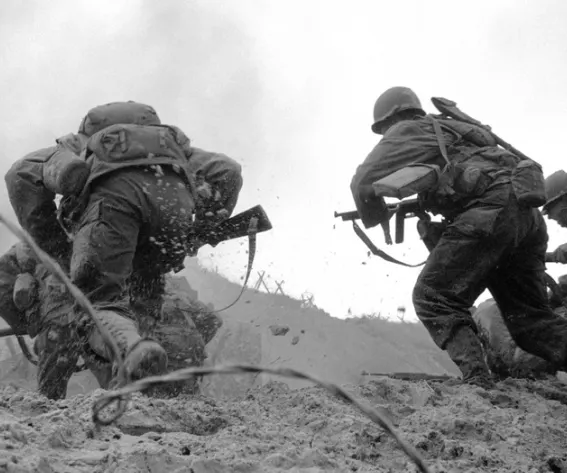
Steven Spielberg's Saving Private Ryan changed the visual language of war cinema when it arrived in 1998. Its opening Normandy sequence combined handheld camerawork, muted colors, chaotic sound design, and rapid editing to create an overwhelming sense of battlefield confusion. Rather than presenting combat as a carefully choreographed spectacle, Spielberg placed audiences alongside soldiers struggling to understand what was happening around them.
The original Call of Duty, released in 2003, adopted much of this approach by surrounding players with explosions, shouted commands, and fellow soldiers constantly moving across the battlefield. Combat felt like part of a larger military operation rather than a sequence of isolated encounters designed around a single hero.
HBO's Band of Brothers was another important reference, particularly in the way it portrayed military brotherhood and the experiences of ordinary soldiers. The show's attention to squad dynamics and personal relationships helped establish the kind of ensemble storytelling that distinguished early Call of Duty campaigns from many other shooters.
These influences continued into Call of Duty 2, where the Normandy landings and other large-scale battles emphasized confusion, vulnerability, and the importance of fighting alongside an organized unit. The games were still action-heavy entertainment, but their presentation borrowed enough from serious war dramas to make the experience feel more grounded.
Modern Warfare and the Influence of Contemporary War Cinema
When Call of Duty 4: Modern Warfare arrived in 2007, the franchise moved away from historical battlefields and embraced the visual style of contemporary military thrillers. Ridley Scott's Black Hawk Down provides one of the clearest cinematic comparisons, particularly through its combination of urban combat, helicopter operations, overlapping radio communication, and documentary-style cinematography.
Modern Warfare developed a similar rhythm, moving players between tense military operations and sudden moments of overwhelming violence. Helicopter insertions, narrow urban environments, and coordinated assaults made the action feel immediate, while the frequent presence of other soldiers reinforced the impression that players were participating in a larger conflict.
The later Modern Warfare games also share filmmaking techniques with Zero Dark Thirty and Sicario, two films that demonstrate how military tension can be created through restraint rather than constant action.
In Zero Dark Thirty, nighttime operations rely on controlled movement, subdued lighting, and the anticipation of danger, an approach that closely resembles the atmosphere of the "Clean House" mission in 2019's Modern Warfare. Similarly, Sicario uses careful framing, uneasy silences, and gradual escalation to make even relatively quiet scenes feel threatening.
These parallels show how the franchise has increasingly embraced the visual sophistication of modern military cinema, particularly when portraying close-quarters operations and covert missions.
Performance Capture and the Growing Importance of Real Actors
As Call of Duty's cinematic ambitions expanded, character performances became just as important as explosive action sequences. Earlier installments relied primarily on voice acting and scripted animations, while more recent games have used sophisticated performance capture to reproduce facial expressions, physical gestures, and subtle emotional reactions.
Barry Sloane's portrayal of Captain Price in the rebooted Modern Warfare series demonstrates how much this technology has changed video game storytelling. His performance gives the character a distinctive physical presence, using restrained expressions, deliberate movements, and carefully measured dialogue to communicate authority and personality.
These details allow characters to convey emotions without relying entirely on exposition, much as actors do in traditional cinema. A brief glance, a change in posture, or a moment of hesitation can add meaning to a conversation, helping the audience connect with digital characters as believable dramatic performances.
For filmmakers, this growing overlap between motion capture, virtual production, and traditional screen acting is one of the most interesting developments in modern interactive entertainment.
Cinematic Set Pieces and the Art of the Virtual Camera
Some of Call of Duty's most memorable moments demonstrate how effectively the franchise translates cinematic action into interactive sequences. The opening tanker mission in Call of Duty 4: Modern Warfare, for example, uses environmental movement, escalating destruction, and carefully timed events to create the sensation of being inside a blockbuster action sequence.
Later installments expanded this approach with collapsing buildings, vehicle pursuits, and airborne operations, but the effectiveness of these sequences depends on more than spectacle alone. Much of their impact comes from the way developers use virtual camerawork and environmental composition to direct attention, even while players retain control over where they look.
Unlike traditional filmmakers, game developers cannot always determine exactly what the audience sees at any given moment. Instead, they use movement, lighting, sound, and character placement to guide the player's gaze toward important events.
A helicopter passing overhead might naturally draw attention toward the sky, while an explosion or a squad member rushing through a doorway can establish the next visual focal point. These techniques allow the game to maintain a carefully directed cinematic rhythm without completely removing the player's sense of participation.
What Modern Warfare 4 Takes From Film
Released on October 23, 2026, Modern Warfare 4 continues the franchise's relationship with war cinema through a campaign built around an escalating conflict on the Korean Peninsula. Its story follows Private Park, a young South Korean soldier caught in a North Korean invasion, while Captain Price conducts a separate covert operation that gradually becomes connected to the wider conflict.
This combination of frontline warfare and intelligence-driven missions brings together two distinct traditions of military filmmaking. Park's experiences recall the immersive battlefield perspective of Saving Private Ryan and Black Hawk Down, while Price's storyline draws on the suspense, secrecy, and moral uncertainty associated with contemporary espionage thrillers.
The campaign also shifts between several visually distinctive locations, including trench warfare in Korea, close-quarters combat in New York, high-speed pursuits through Paris, and nighttime SAS operations in Mumbai. Each environment provides opportunities for different cinematic techniques, allowing the narrative to alternate between large-scale spectacle and more controlled moments of tactical suspense.
That contrast has become one of the defining characteristics of Modern Warfare's storytelling, reflecting the way contemporary action films balance elaborate set pieces with quieter sequences designed to establish atmosphere, character, and tension.
When Video Games Become Interactive War Films
Call of Duty's evolution illustrates how deeply filmmaking has influenced the development of modern video game storytelling. Its earliest campaigns borrowed the atmosphere and ensemble perspective of World War II dramas, while Modern Warfare introduced the visual techniques of contemporary military thrillers and gradually incorporated more sophisticated acting performances and virtual cinematography.
With Modern Warfare 4, the franchise continues bringing these elements together through a combination of battlefield drama, covert operations, and globe-spanning action. Although the medium allows audiences to participate rather than simply observe, the underlying storytelling techniques remain closely connected to cinema.
For anyone interested in filmmaking, Call of Duty offers a compelling example of how familiar cinematic principles can be adapted to an interactive format, creating experiences that feel both carefully directed and personally immersive.
Image source: DreamWorks/EA
The TMFF newsletter
Monthly winners, new reviews and festival news, once a month. No spam.
Childhood and caregiving have inspired some of cinema's most emotionally powerful stories. From intimate family dramas to coming-of-age films, filmmakers frequently explore how children develop relationships with parents
What you communicate before an actor steps into the booth often decides whether a remote performance works, and that burden doubles when you're also the one casting and cutting the final sound. Distance itself isn't the
Space has always fascinated humanity. The thought of traveling beyond Earth, exploring distant planets, and discovering the mysteries of the universe has inspired countless stories. Cinema has played a major role in turn




Comments