
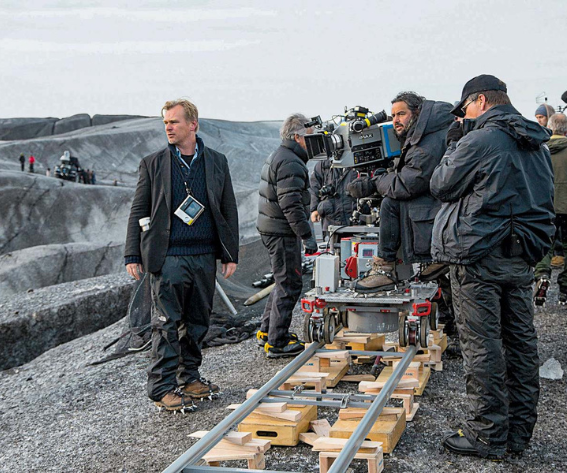
Some films are remembered as much for their landscapes as for their characters. Vast mountains, frozen plains, empty deserts, and isolated coastlines can give a story a sense of scale that no studio set can quite reproduce. New Zealand is one of the clearest examples of this effect. Its alpine ranges, volcanic terrain, dense forests, and dramatic valleys have helped shape the visual identity of major productions, most famously The Lord of the Rings and The Hobbit. In these films, the landscape does not simply sit behind the action. It becomes part of the world itself, helping audiences believe in places that are fictional yet feel completely real.
Remote filming locations can also attract international attention long after production ends. New Zealand, for instance, has built a strong connection between screen tourism and broader travel experiences, with visitors often exploring famous shooting sites alongside local attractions and digital entertainment such as online casino NZ platforms. For filmmakers, however, the reason to travel so far is usually more creative than commercial. Certain landscapes have a natural scale, texture, and atmosphere that are difficult to reproduce elsewhere, and even the most advanced studio technology cannot always imitate the unpredictability of the real world.
Why Filmmakers Travel So Far
Modern productions have access to enormous sound stages, virtual production environments, detailed digital backdrops, and increasingly sophisticated visual effects. In theory, filmmakers no longer need to cross continents to find dramatic mountains, deserts, jungles, or frozen wilderness. In practice, real locations still offer qualities that are difficult to recreate convincingly.
Natural light behaves differently across open landscapes, while wind, weather, terrain, and distance all affect the way performers move and the way cinematographers frame a scene. A genuine horizon has a depth that can be difficult to imitate, and shifting clouds or changing light can produce unexpected visual moments that were never written into the screenplay. These elements introduce uncertainty, but they can also give a film a stronger sense of realism and atmosphere.
Remote environments can even influence the psychology of a production. When a cast and crew are physically isolated from cities and familiar surroundings, that sense of separation can affect performances and creative choices. For stories centered on survival, exploration, conflict, adventure, or solitude, the location becomes more than a visual backdrop. It becomes part of the filmmaking process itself.
Patagonia and the Drama of the Southern Frontier
Stretching across southern Argentina and Chile, Patagonia offers some of the most dramatic landscapes available to filmmakers. Jagged mountain ranges rise above immense plains, glaciers cut through valleys, and open skies can make human figures appear almost insignificant by comparison.
The region is especially attractive to productions looking for environments that feel untouched, historical, or far removed from modern civilization. Its sheer scale is ideal for wide shots that emphasize isolation and vulnerability, but that beauty comes with practical challenges.
Equipment may need to travel long distances over difficult roads, while sudden weather changes can disrupt carefully planned shooting schedules. Strong winds can affect microphones, camera stability, costumes, and even the ability of crew members to work safely. Despite these difficulties, Patagonia continues to appeal to filmmakers because the landscape already carries a sense of drama before the camera even starts rolling.
Antarctica: The Ultimate Location Challenge
Few places represent extreme location filmmaking more clearly than Antarctica. The continent offers striking visual possibilities through endless ice fields, unusual light, towering formations, and vast expanses of empty space. At the same time, it is one of the most demanding environments in which to operate a film crew.
Transport is limited, weather conditions can become dangerous with little warning, and environmental restrictions require careful planning. Every item of equipment must be considered in advance because replacing a damaged component is far more complicated than it would be on a conventional set. Crews must also account for cold-weather performance, battery life, protective gear, and the physical strain of working in such severe conditions.
Documentary teams have traditionally been the most common filmmakers working in Antarctica, although feature productions have also drawn inspiration from polar environments. What makes the continent especially compelling on screen is its overwhelming sense of distance. The isolation is not created through production design. It is already there, and the camera simply captures it.
The Moroccan Desert and the Illusion of Another World
Remote filmmaking does not always mean snow and ice. The deserts of Morocco have long played a major role in international cinema, with areas around Ouarzazate and the surrounding landscapes appearing as ancient civilizations, war zones, distant planets, and fictional kingdoms.
Part of the attraction lies in the visual flexibility of the region. A single stretch of desert can suggest several different countries or historical periods depending on the production design, costumes, and cinematography. With careful framing, a familiar desert road or rocky plain can become somewhere entirely imaginary.
The environment still presents plenty of challenges. Sand can enter cameras, lenses, vehicles, and mechanical equipment, while large temperature changes place additional pressure on both people and technology. Water, shade, transport, and medical planning all become important logistical concerns. Even so, the combination of open horizons, dramatic rock formations, and distinctive natural light continues to make Morocco one of the most useful and visually powerful locations for large-scale productions.
Iceland and the Landscape of Science Fiction
Iceland has become one of cinema’s favorite substitutes for alien worlds, futuristic landscapes, and extreme environments. Its black beaches, lava fields, glaciers, waterfalls, volcanic plains, and broad treeless expanses create a range of unusual visual settings within a relatively compact area.
This variety gives filmmakers considerable flexibility. A production can move from icy terrain to dark volcanic landscapes without crossing an entire continent, which makes Iceland especially attractive for films that need several visually different environments in one country.
Its geography also reveals something important about location scouting. Filmmakers are not always searching for a specific real-world place. Often they are searching for a mood, atmosphere, or visual impression. A barren lava field does not have to represent Iceland on screen. With the right composition, visual effects, and production design, it can become a post-apocalyptic Earth, a distant planet, or a fictional world that exists only within the story.
Mountains, Altitude, and the Limits of Production
High-altitude locations create another set of challenges for film crews. Mountain environments can produce extraordinary images, but they also require careful physical preparation and strict attention to safety.
Crew members may need time to acclimatize, while equipment often has to be transported across terrain that standard production vehicles cannot reach. Cold temperatures can reduce battery performance, and sudden weather changes may affect both safety and continuity. Helicopter access can depend on visibility and wind conditions, while even simple tasks take longer when the crew is working at altitude.
These limitations can also influence creative decisions. Directors may have fewer opportunities for repeated takes, while cinematographers may choose lighter camera systems that are easier to transport. Scenes that appear effortless on screen can therefore represent days of logistical preparation and physical effort.
When productions film genuine climbing or expedition sequences, the difficulty becomes even greater because the crew must capture the action while dealing with many of the same environmental hazards as the performers.
Islands Far From the Mainland
Remote islands create a different form of cinematic isolation. Unlike deserts or mountain ranges, islands are naturally enclosed by water, which can make a production feel physically separated from the outside world.
This isolation also complicates logistics. Construction materials, food, fuel, costumes, camera equipment, and other essential supplies may need to arrive by boat or aircraft, which increases costs and reduces flexibility. If something is forgotten or damaged, replacing it can take much longer than it would on the mainland.
For filmmakers, however, the effort can be worthwhile. Volcanic islands, tropical archipelagos, and isolated northern islands offer coastlines, geological formations, and weather conditions that are difficult to imitate elsewhere. They can also communicate isolation instantly. A single figure standing on an empty shoreline surrounded by open water can establish distance from civilization without the need for dialogue or exposition.
When Difficulty Becomes Part of the Image
Choosing an extreme location is rarely the cheapest or easiest option. A production could often recreate parts of the environment digitally or find a more accessible substitute, yet filmmakers continue traveling to remote areas because physical landscapes introduce details that are difficult to plan.
Clouds shift unexpectedly, snow changes the quality of reflected light, dust follows a vehicle across a desert, fog briefly covers a mountain, and waves alter the appearance of a coastline from one take to the next. These unpredictable elements create texture and authenticity that carefully controlled environments can struggle to replicate, which is why some of cinema’s most memorable landscapes feel so powerful precisely because they are not perfectly controlled.
Rather than weakening the image, uncertainty can become part of its appeal. When filmmakers are willing to adapt to the environment instead of trying to dominate it, the location often contributes visual details that no storyboard could have fully anticipated.
The Location as a Silent Character
The best remote filming locations do more than impress audiences. They affect the emotional scale of a story and influence how viewers understand the characters within it.
A tiny human figure surrounded by mountains can suggest vulnerability, while a road crossing an empty desert can immediately communicate distance and uncertainty. A frozen horizon can create a sense of isolation before a character says a single word, and a coastline battered by wind and waves can make a scene feel more exposed and dangerous.
This is why remote location filmmaking continues despite the growth of digital alternatives. Technology can create extraordinary environments, but real geography carries its own history, imperfections, changing weather, and physical scale. Those qualities are difficult to manufacture completely.
At the edge of the world, filmmakers often discover that the landscape is not simply somewhere to place the camera. It becomes one of the story’s strongest visual elements, shaping atmosphere, performance, and emotion in ways that a controlled set may never quite achieve.
Image srouce: Paramount Pictures, Warner Bros. Pictures, 2014
You may also like:





Leave a reply