The same pattern surfaces repeatedly in how audiences spend their leisure attention: something looks odd, word spreads, and people sample it just to verify the strangeness for themselves. The Playripcity editorial team has watched that mechanism operate across different entertainment categories. The Rip City slot demo draws curious users in through the same low-friction logic — free to try, no commitment required, novelty doing the promotional work that marketing budgets normally handle. Niu Lai, a Chinese animated film that earned 200 yuan on certain days of its opening run, has now demonstrated the same pull at the theatrical box office, at a scale that surprised the entire Chinese film industry.
From 200-Yuan Days to 8.2 Million Yuan
The numbers are stark enough to print without commentary. According to The Indian Express, Niu Lai earned only around 10,000 yuan in its first ten days of release, with individual days recording as little as 200 yuan in ticket sales. Those figures, tracked by the Chinese movie-tracking platform Maoyan, placed the film among the least-watched theatrical releases of the summer.
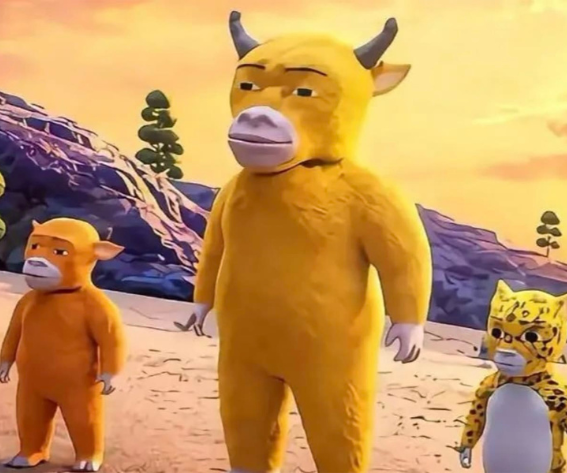
Then the mocking clips began to circulate. On its peak day, Niu Lai took in 8.2 million yuan and recorded nearly 300,000 admissions. Its total box office reached 17.1 million yuan, equivalent to roughly $2.5 million. On certain days during that surge, the film outperformed Christopher Nolan’s The Odyssey and Spider-Man: Brand New Day in daily collections at the Chinese box office — though it remains far behind both in cumulative earnings.
Niu Lai had been released on August 5 with no trailer, no promotional tour, and no significant pre-release campaign. Some cinemas, lacking official promotional artwork, had staff members draw posters by hand. The Associated Press reported that improvised slogans appeared on those materials, including “Come on over if you’re into the bizarre” and “No refunds.”
A Mother, a Son, Second-Hand Computers, and Five Years
The film was produced over five years by director Xin Yumeng and his mother, Sun Lifang, according to Red Star News as reported by The Indian Express. Xin handled the animation while Sun worked on the screenplay and voices. Neither had a professional filmmaking background. Xin’s prior career was in interior design.
He handled modelling, rigging, animation, lighting, rendering, and editing himself. The reported production budget was between 20,000 and 30,000 yuan. Much of the equipment consisted of second-hand computers.
Xin drew a direct line between his two trades. “It’s all about building things up,” he said, “only we used to use bricks, now we use polygons.” On the question of visual quality, he was candid about the tradeoff he accepted. “If we focused all our energy on rendering precision, this film would never have been made,” he said in a radio interview for Entrepreneurial Youth Talk. “Between perceiving details and the overall narrative, I chose to let the story run first.” As for the viral spread, he rejected any suggestion that it was engineered. “There’s nothing to market,” he said. “I don’t even have the money for marketing.”
Pranks, Memes, and the Audience That Showed Up to Verify
Social media clips and screenshots mocking the film’s animation and storyline circulated widely, and rather than suppressing ticket sales, they generated a new category of viewer: people who went specifically to confirm whether the film was as strange as advertised.
Du Mingxi, a 19-year-old Shanghai college student identified by the Associated Press, was direct about his motivation. “My initial intention has always been to play pranks on my friends,” he said. After persuading them to watch, his read on their reactions was less analytical than honest. “They are just the same, it is funny but hard to describe what’s funny about it, and young people just love spreading these memes virally.”
Not every viewer came armed with irony. Zhong Jiaming, a vocational schoolteacher in Guangzhou, offered a different account to the Associated Press. “This is a movie for the young at heart,” he said. “It is simple and honest, like a bedtime story for children.” For Zhong, the film’s roughness read as sincerity rather than failure, a contrast to the technical polish of more expensive productions.
Official Criticism and the Attention It Generated
The backlash arrived in institutional form. A commentary published by the state-owned Beijing News warned that cinemas risked “losing the trust” of viewers if they continued to “lower their standard” by giving Niu Lai more screenings. The publication urged cinemas to “act as gatekeepers for the audience.”
An anonymous film industry professional, quoted by The Guardian and cited in The Indian Express, was more direct. The source described Niu Lai as “bad in every aspect imaginable, including the story, special effects and almost every element that a movie is expected to have,” and said its success “feels like an embarrassment to the Chinese film industry.”
Both responses had the same practical effect. The criticism renewed coverage, coverage renewed curiosity, and renewed curiosity produced ticket purchases from audiences who might otherwise never have heard of the film.
The Cycle That Sold the Tickets
Niu Lai’s trajectory this summer follows a logic that does not require a marketing department to operate. Mockery produced clips. Clips produced memes. Memes produced an audience willing to pay to experience something that defied easy description. Word of mouth built from the same material that was supposed to bury the film. By the time the criticism from industry professionals and state media arrived, that cycle had already compounded several times over, turning a 200-yuan day into a 8.2-million-yuan day and a hand-drawn cinema poster into a cultural footnote of the Chinese summer box office.
Image source: Niu Lai (2026)
You may also like:





Leave a reply