
With technological advances, cinema started moving closer to technical perfection. As an industry, we spent years chasing sharper images, smoother movement and cleaner colour, because that’s what progress looked like.
The funny thing is, we’ve more or less achieved it. Today, almost anyone can produce beautiful-looking footage. High-end cinema cameras are more affordable than ever, colour grading tools that were once reserved for Hollywood now run on laptops and animated feature films are being created on free software.
Which raises an awkward question. If everyone can make something look beautiful, does beauty still tell us anything?
Moving in the Opposite Direction
I don’t think it’s a coincidence that some of the most interesting films and television of recent years have moved in the opposite direction. Aftersun deliberately embraces the imperfections of old home video. The Bear often feels like you’re standing in the kitchen with the characters rather than watching a carefully choreographed drama. The Zone of Interest relies on static cameras, natural light and an almost clinical restraint, trusting the audience to sit with what they’re seeing rather than manipulating every emotion. While The Holdovers deliberately echoes the texture and visual language of 1970s cinema, favouring warmth, simplicity and lived-in locations over the hyper-polished aesthetic that has become so commonplace.
These productions don’t lack craftsmanship. In fact, all are meticulously made. They simply wear that craftsmanship lightly, allowing the story and performances to take centre stage instead of constantly reminding us how beautiful the filmmaking is.
None of those productions feel careless. In fact, they’re incredibly deliberate. The handheld movement, available light and practical locations are all carefully considered creative decisions. They just happen to create something that feels observed rather than manufactured. Perhaps that’s what audiences are responding to.
When “Cinematic” Became a Formula
For years we’ve been taught that polished equals professional. Social media didn’t help. Somewhere along the way, “cinematic” became shorthand for orange and teal grades, razor-thin depth of field, symmetrical compositions and silky-smooth gimbal shots. Scroll through enough filmmaking tutorials and you start to notice that everyone is being taught to chase exactly the same aesthetic.
Now AI production has arrived and thrown another spanner in the works. It can already generate perfect compositions, perfect lighting and perfect camera movement, and it’s improving at a frightening pace. Ironically, the easier it becomes to create flawless imagery, the less those flawless images seem to impress us. In some cases, they even make us suspicious.
A Shift Beyond Cinema
You can see that shift happening outside cinema too. It’s increasingly reflected in corporate video production and commercials, where brands are moving away from highly polished presentations and leaning into documentary-style filmmaking, real contributors and practical locations. This year’s Super Bowl was a fascinating example. Half the adverts embraced spectacle, visual excess and AI-enhanced production, while the other half felt almost like a reaction against it, relying on strong performances, practical filmmaking and simple ideas executed brilliantly. It wasn’t really a battle between AI and traditional filmmaking. It felt more like a debate about what audiences actually trust.
Production Value Is No Longer the Differentiator
The same shift is happening on YouTube. Not because creators suddenly have access to Hollywood cameras, but because they have access to audiences. Projects like Kane Parsons’ The Backrooms have shown that a great concept can evolve from a YouTube channel into a studio-backed feature, while creators are increasingly being hired to direct because they’ve already demonstrated what matters most: they know how to tell a story people want to watch. Production value has become more accessible than ever. Original storytelling hasn’t.
The Value of Human Imperfection
Maybe that’s the real change. Audiences haven’t suddenly fallen out of love with beautiful cinematography. They still appreciate craftsmanship as much as they ever did. What they seem to value more highly now is the feeling that they’re watching something made by people rather than generated by a machine. A small camera wobble, an imperfect performance or a shaft of natural light creeping through a window can sometimes do more for credibility than another day spent perfecting the grade.
It’s an odd place for filmmaking to find itself. After decades of inventing technology designed to remove every imperfection imaginable, we’re slowly rediscovering that some of those imperfections were doing an important job all along. They reminded us there was a human being behind the camera.
And in a world where perfection is becoming increasingly easy to generate, that might turn out to be the most valuable thing of all.
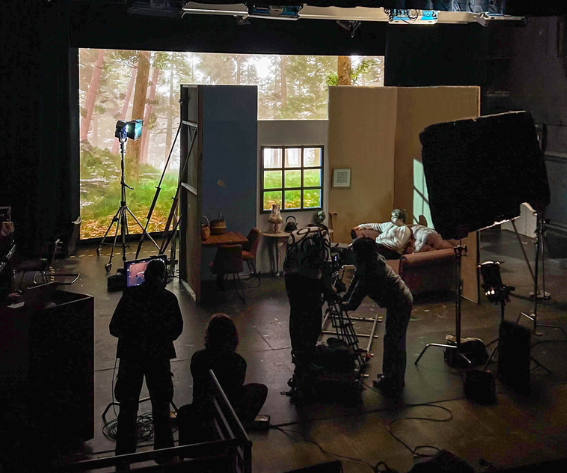
Image source: Central Film School
You may also like:




Leave a reply