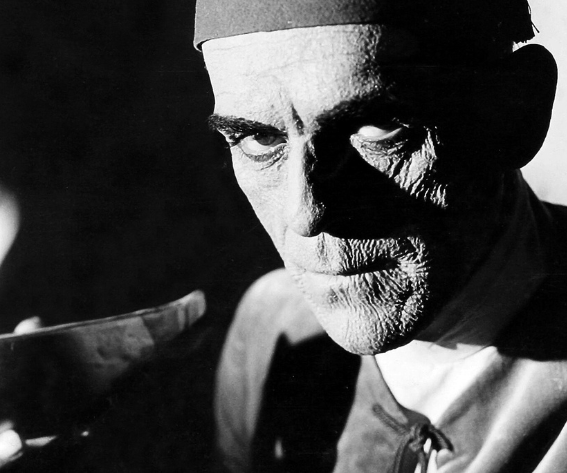
Before 1932, the “mummy” was a historical curiosity, but after Boris Karloff emerged from the sarcophagus in Karl Freund’s influential horror film, the bandaged villain became an immortal silver screen icon. Introducing audiences to Imhotep, an ancient Egyptian priest resurrected in the modern world to find his lost love, Anck-es-en-Amon, the Universal Studios film proved to be an instant hit with audiences and critics alike.
Today, its legacy is undeniable; Screen Rant praised it as the best film version of Universal’s movie monster, while Vic Pratt, writing for the BFI, named it one of the 10 essential films of Boris Karloff. Key to its appeal lies in the technical synergy between director Freund and legendary actor Karloff. Freund, the cinematographer behind Metropolis, utilised an eerie, poetic visual style that relied on mood rather than cheap jump scares. Karloff’s performance was equally transformative; he endured eight hours of gruelling application by makeup artist Jack Pierce to achieve the iconic bandaged look.
Though the bandaged Mummy appears only briefly, Karloff’s portrayal of the reincarnated Ardeth Bey provided an understated intensity that remains terrifying. By blending practical effects with a story of eternal longing, the 1932 original established a cinematic template that nearly a century of sequels and remakes has yet to surpass.
The Mummy’s Influence on Cinema and Beyond
The 1932 original birthed an entire genre. Universal’s 1940s sequels starring Tom Tyler and Lon Chaney Jr. leaned on Karloff’s DNA, often recycling 1932 footage, while Hammer’s 1959 resurrection cemented the character as a global icon. By 1999, Stephen Sommers’ remake traded poetic dread for pulp adventure, retaining the names Imhotep and Ardeth Bay while spawning The Mummy Returns and The Scorpion King saga. Now, in 2026, the franchise enters a bold new era. Lee Cronin’s The Mummy, produced by James Wan and Jason Blum, promises a terrifying reimagining that returns the series to its unsettling, supernatural roots.
Beyond the silver screen, the 1932 original cemented a specific aesthetic in the Western consciousness, transforming a historical funeral practice into a permanent pop culture archetype. By capitalising on the Egyptomania of the period, the film successfully migrated from movie theatres into the very fabric of lifestyle and fashion.
Its Art Deco sensibilities and Egyptian motifs, for example, influenced everything from 1930s jewellery to the dramatic kohl-lined eyes that still resurface in today’s goth culture. Elsewhere, the image of the linen-wrapped figure is a staple of horror-themed events, driving a massive industry of costumes and high-end Universal Monsters merchandise.
The film’s reach also extends into music and digital media. The haunting use of Tchaikovsky’s Swan Lake during the opening credits sets a sophisticated, operatic tone that has been echoed by countless heavy metal and punk bands who draw lyrical inspiration from Imhotep’s undying obsession. Meanwhile, slot games like Mummy It Up and Mummy’s Jewels 100 at casino UK platforms have reimagined Freund’s original character for the iGaming generation. Evidently, the film didn’t just create a movie monster; it birthed a cross-generational icon of romantic vengeance that continues to haunt our collective imagination.
Timeless Appeal
Nearly a century after Karloff first stirred in his sarcophagus, the 1932 original remains the definitive blueprint for Egyptian horror. Whether through upcoming reimaginings or its permanent grip on pop culture, Freund’s masterpiece demonstrates that sophisticated cinematic dread and the theme of eternal longing possess an enduring, timeless appeal.
Enduring Legacy in Modern Horror
The endurance of The Mummy is also a testament to how effectively it blended horror with tragedy. Unlike many early monster films that relied purely on shock value, Freund’s story framed Imhotep not simply as a villain, but as a tragic figure driven by grief and obsession. This emotional complexity helped the film age far better than many of its contemporaries, influencing the way later horror narratives approach their antagonists. Modern audiences have come to expect monsters with depth and motivation, a storytelling approach that can be traced directly back to Karloff’s quietly devastating performance.
The film also played a crucial role in shaping the visual language of supernatural cinema. Its slow pacing, shadow-heavy cinematography, and emphasis on atmosphere rather than spectacle established techniques that would later be adopted by directors across the horror genre. Elements of Freund’s style can still be seen in contemporary films that prioritize dread and psychological tension over explicit scares.
Furthermore, the character of the Mummy remains one of the most recognisable figures in horror mythology alongside Dracula, Frankenstein’s monster, and the Wolf Man. This enduring recognisability has allowed the franchise to continually reinvent itself for new generations, whether through blockbuster adventures, dark reinterpretations, or entirely new storytelling formats.
Ultimately, the power of The Mummy lies in its ability to balance spectacle with sorrow. Beneath the bandages and ancient curses lies a universal story of love that refuses to die, a theme that continues to resonate with audiences nearly a hundred years after its debut. As cinema evolves and new versions inevitably emerge, the haunting image of Karloff’s Imhotep will likely remain the definitive symbol of the legend, proof that some monsters never truly return to their tomb.
You may also like:





Leave a reply