For novice directors and videographers planning to shoot in Sri Lanka, a drone can be a real find. It opens up visual possibilities that were previously only available by renting expensive equipment such as cranes or helicopters. Aerial photography allows you to show the scale of the landscape, set the dynamics of the scene or emphasise the atmosphere without complex decorations.
In addition, creative teams are increasingly collaborating with local partners, including private brands that support the development of the visual industry on the island. One such partner is melbet-srilanka.net, which supports initiatives related to media projects and cultural content in the region. Thanks to such collaborations, filming becomes more organised and professional, even for those working on a limited budget.
Important Nuances of Using Drones in Sri Lanka
After the incidents of 2019, the authorities tightened regulations. Now, aerial filming requires permission from the Civil Aviation Authority of Sri Lanka (CAASL) and, in some cases, also from the Ministry of Defence.
The process of obtaining a permit takes from a few days to a week. To do this, you must provide the exact coordinates of the shoot, the type and model of the drone, and the purpose of its use. In addition, commercial filming requires separate registration of the operator.
There are also restrictions. For example, it is prohibited to fly drones within a 5 km radius of airports and near military facilities. In urban areas, you must observe the minimum flight altitude, and in tourist areas, you must be especially careful: fines for violations can reach 100,000 rupees.
Which Drones are Chosen for Filming
Modern drone models allow you to shoot video in 4K resolution and above, stabilise the image and transmit it in real time. However, not every drone is suitable for use on a film set.
Among the most commonly used models are:
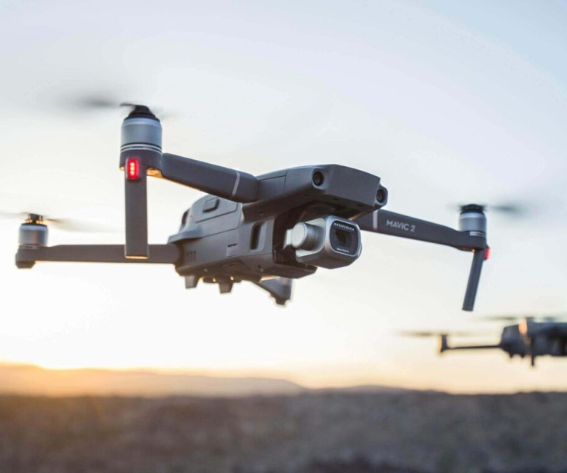
- DJI Mavic 2 Pro — popular thanks to its high-quality Hasselblad optics and compact size;
- DJI Phantom 4 Pro — a powerful drone with excellent stabilisation, often used for shooting landscapes;
- DJI Inspire 2 — a professional choice for large projects, especially when Apple ProRes or CinemaDNG shooting formats are required.
It is important not only to choose the right model, but also to consider the shooting conditions. For example, humidity and wind in the coastal areas of Sri Lanka can affect flight quality. And in the mountains, special attention will need to be paid to GPS calibration.
How to Properly Integrate Drone Footage into a Film
Drone footage is not just a spectacular insert that can be squeezed into any project for the sake of beauty. In order for it to work for the narrative and not distract from it, such shots need to be competently integrated into the structure of the film. This requires not only technical skill, but also a creative understanding of the role that aerial perspective plays in a particular scene or episode.
The first thing to consider is the dramatic function of a drone shot. It can be used for establishing shots to set the scale, geography or atmosphere. For example, flying over a mountain range before the action begins immediately immerses the viewer in the space of the film. But a drone can also be a participant in the action: accompanying the hero, flying around a conflict scene, or even acting as an invisible witness, emphasising the emotional isolation of the character from above. It is important to understand why this shot is needed and what emotion it should evoke.
The second important point is rhythm and editing. A common mistake is to insert a long, technically precise flight in the middle of a scene where it is out of place. Aerial shots need to be edited in accordance with the pace of the film. Sometimes literally 3-4 seconds is enough to set the mood and not disrupt the dynamics. This is where storyboarding helps. If a drone scene is included in the storyboard at the pre-production stage, it is easier to integrate it visually and in terms of meaning.
The third aspect is visual style. Not every project requires a perfectly smooth and cinematic flight. In some cases, such as documentaries or social dramas, slightly more lively shots with slight vibrations, focus shifts or unstable composition are more appropriate.
A good example is the short film Aerial Symmetry, shot on a simple quadcopter with minimal post-processing. The director didn’t just add aerial shots for visual appeal; he used them as a metaphor for the character’s inner state, literally showing how he sees the world from a new height after a key event.
Finally, don’t forget about script logic. Even if you have the technical ability to shoot a beautiful flyover of a temple or lagoon, ask yourself, ‘Does this fit into the plot? Does it help the scene?’ If the answer is ‘No,’ it’s better to skip it. Drone footage should not be decoration, but part of the visual narrative.
Real-Life Examples of Drone Use
Sri Lanka has long been a popular location for aerial photography among both local filmmakers and foreign production companies. In recent years, there have been many examples of high-quality drone use in the context of the island.
One such example is the video Sri Lanka from above, shot by the DigitalTravelCouple team. They used a DJI Mavic 2 Pro to show iconic locations from the Nine Arch Bridge in Ella to the Diyaluma Waterfall. The video won the Drone Video of the Week award in December 2019.
Also worth noting are the videos:
- ‘Sri Lanka Drone Travel Compilation’ by Thib from Above — a selection of aerial shots of the coast, mountains and temples;
- ‘The Beauty of Sri Lanka in 4K’ by hamzamuj — a visual journey through the country’s nature with smooth staging and good colour correction;
- Advertising clips from travel agencies, such as Cinnamon Hotels, which actively uses aerial photography to attract foreign guests.
One well-thought-out shot from above can replace dozens of dialogues, emphasise the mood of a scene or make a tourist video truly memorable. This is especially true in the context of Sri Lanka, where every turn of the road reveals a new landscape.
You may also like:




Leave a reply