
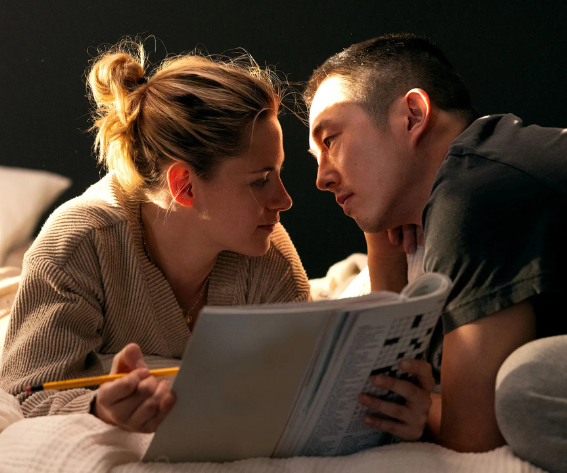
Movies did not just “show” romance. They trained it. The pacing, the rules, the little signals people think are law… most of that got planted by two hours of editing and a soundtrack doing heavy lifting. Then online dating showed up and made it worse and better at the same time. Better, because meeting people got easier. Worse, because now every choice feels like casting, and everybody acts like they are one scene away from a dramatic plot twist. Cinema also trained people to think romance should be legible at a glance. Lighting, framing, and music tell the audience how to feel before characters even speak. Online dating copies that visual shortcut. A flattering photo signals “main character energy.” A dark or blurry one signals “background role.” People are not reacting to compatibility, they are reacting to visual storytelling instincts learned from years of watching who gets the close-up and who gets cut.
Movies Habits Hiding in Profiles, Chats, and First Dates
Cinema loves speed. One glance, one line, a spark, done. Online dating copies that pressure and puts it on a timer. People swipe like they are judging trailers, not humans. Profiles turn into tiny movie posters: best angle, best taglines, no boring details that would make life… normal. Film genres quietly assign roles: the charming lead, the quirky best friend, the emotionally unavailable mystery. Dating profiles mirror this. Bios get written like character archetypes instead of honest descriptions: “hopeless romantic,” “villain era,” “soft but sarcastic.” The problem is that real relationships are not genre-stable. Someone cast themselves as a rom-com lead, then behaves like a documentary subject on the actual date, and both people feel misled.
Chats get hit by the “perfect line” delusion. Like one message is supposed to prove charm, humor, emotional depth, and moral character. That is not flirting, that is job interviews with emojis. And yep, people read into punctuation like it is a secret code. One extra dot and suddenly it means “mysterious”. Or “angry”. Or “busy”. Or nothing, because it is just typing.
This is also why “instant chemistry” becomes a demand, not a bonus. Movies cut out boredom. Dating apps cannot. Cinema skips the pauses, the second-guessing, the awkward silences, all the parts where real connection actually forms. When people expect movie pacing in real time, they interpret normal slowness as failure. A relationship that would look fine after editing feels “wrong” while living it, because there is no soundtrack telling you to stay. The second a chat feels regular, people bail and go searching again, because the brain expects fireworks. That mindset shows up almost on hookup site too, where the whole point is speed, but somehow folks still expect movie-style mind reading… wild.
Rom-Coms are Changing Because Online Dating Rewired the Plot
Old-school rom-com logic is simple: fate pushes two people together, misunderstandings happen, big speech fixes it. Online dating does not work like fate. It works like options. Too many options. So modern love stories keep adjusting, because pretending apps do not exist looks fake now.
People are leaning into the weird parts: long talking phases, “Are we meeting or just chatting forever”, sudden silence, the awkward switch from typing to real voice. They also show how people build mini-personas online, then try to carry that mask into real life and it slips fast. That shift is basically the whole point of modern online dating teaching love on screen without needing a fairy godmother or a magical coincidence every ten minutes.
And here is the sneaky part: once movies include app behaviors, viewers absorb them as normal. Ghosting becomes a plot device. Rapid “next, next, next” becomes comedy. The audience laughs, then goes back to swiping and acts the same way… because it felt standard on screen. What makes this cycle stick is that viewers are no longer passive. They watch stories about dating apps, then immediately open one. Film becomes rehearsal. Apps become the performance. When both exaggerate the same behaviors (speed, disposability, dramatic exits), it stops feeling exaggerated at all. It feels like how love is “supposed” to work now.
Keeping Expectations Sane When Movies and Apps Both Exaggerate
Movies exaggerate. Apps also exaggerate, just in a different direction. Apps compress people into thumbnails and bullet points. Movies stretch romance into clean story beats. Both mess with expectations, especially the idea that a partner should “just know” what is wanted, or that big gestures are the main proof of love. That pressure is exactly what gets called out in writing about unrealistic expectations from romantic comedies and how repeated patterns can quietly set people up to feel disappointed.
Conclusion
So the fix is not “stop watching movies” or “delete the apps.” The fix is simpler, and yeah, less dramatic. Treat chats like screening for basic fit, not as a full romance arc. Treat first dates like information, not judgement day. Stop assuming intensity equals quality. And if a date is just okay, that does not mean it is trash. It means it is… okay. A normal state, shocking.
You may also like:



Leave a reply