
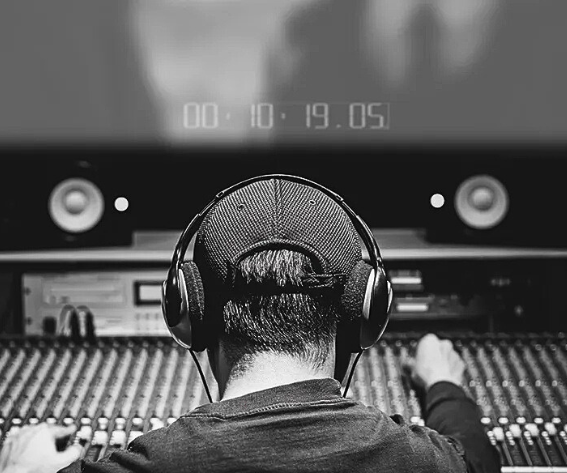
Every film score begins in near silence. Before the orchestra, before the studio, before the famous theme, there is usually one composer, one instrument, and a vague emotional instruction from a director. “It should feel hopeful but tragic.” “We need tension, but not fear.” Somewhere between those contradictions a musical identity has to be invented. Modern composers may use sophisticated tools and even data references like a Music Analytics Platform, but the real process still starts the same way it always has. A person sits at a piano and tries to translate story into sound.
The First Conversation
The earliest stage is not about notes. It is about interpretation. Directors rarely speak in musical language, and composers rarely speak in cinematic language, yet they must understand each other perfectly. The composer watches the rough cut and asks questions that sound philosophical rather than technical.
- Who is the audience meant to sympathize with.
- Where does the character change internally.
- Should the viewer know more than the character or less.
These answers determine tone before melody exists. A scene of someone walking down a hallway could be suspense, sadness, comedy, or triumph depending entirely on musical perspective. The composer’s first job is deciding the emotional truth of the film. The piano is simply the quickest way to test that truth.
Finding the Theme
Most scores begin with small fragments rather than full melodies. A rhythm, a chord progression, or even just a pair of intervals can define the emotional DNA of the film. Composers improvise while watching scenes repeatedly. The goal is not complexity but recognition. A theme must feel inevitable, as if the film was always supposed to sound this way.
This stage often produces dozens of variations. Some are too obvious. Others feel clever but empty. Eventually one idea survives repeated listening. When a composer can play the same phrase fifty times and still feel something, that is usually the one.
At the piano, the theme is fragile. It works without production, without orchestration, and without spectacle. If it fails here, no amount of orchestral power will save it later.
Mapping the Story
Once a core idea exists, the composer turns to structure. Films are not scored continuously. They are shaped by musical entrances and exits called cues. Each cue must have a narrative purpose. Music can reveal information, hide information, or manipulate pacing.
The composer creates a cue map. Opening titles introduce the emotional palette. Early scenes establish motifs linked to characters or ideas. Midpoint sequences expand harmony to signal change. Final scenes often resolve harmonic tension introduced at the beginning. The audience rarely notices this architecture consciously, but they feel it.
Timing matters as much as harmony. Enter too early and the emotion feels forced. Enter too late and the scene feels empty. The composer constantly adjusts frames, sometimes shifting music by fractions of a second until the reaction feels natural.
Expanding Beyond the Piano
After the thematic skeleton works, orchestration begins. This is where imagination meets physics. A piano compresses every possible instrument into one surface. An orchestra separates those colors across space.
Strings often carry emotional continuity because they sustain notes naturally. Woodwinds add personality and intimacy. Brass introduces authority or danger. Percussion controls physical energy. Each instrument is not just a sound but a psychological signal shaped by decades of cinematic memory.
The composer assigns the theme to different sections depending on story perspective. A hero theme on solo violin feels vulnerable. The same theme in full brass feels victorious. No new melody is required to transform meaning, only new orchestral context.
Mockups and Revision
Before musicians record anything, the score exists digitally. Detailed mockups simulate the orchestra so the director can react. This stage can last longer than writing the music itself. Scenes are recut. Dialogue changes. Emotional intentions shift.
Composers revise constantly. They remove sections they personally love because the story does not need them. They simplify complex passages because clarity communicates faster. Film music rewards precision over display.
During production cycles the score also interacts with marketing departments. Short excerpts may be adapted for trailers or promotional activities, sometimes before the film is finished. These versions must represent the film while functioning independently, which often requires restructuring the music yet again.
Recording the Orchestra
The recording session is the first moment the music truly breathes. Dozens of musicians interpret markings that existed only as symbols. Small performance variations humanize the score. Vibrato, bow pressure, and phrasing create emotional detail impossible to program completely.
The composer conducts or supervises, adjusting balance in real time. A line written for clarity may overpower dialogue frequencies. A delicate harmony might disappear beneath sound effects. Recording engineers capture multiple takes so the final mix can serve the film rather than the composition alone.
The Final Mix
The last stage is integration. Music is only one layer among dialogue and sound design. A perfect musical moment can be reduced or muted entirely if the story needs silence. The composer collaborates with mixers to shape perception rather than volume.
Often the audience hears less music than expected. The purpose of film scoring is not constant presence but meaningful presence. When the theme returns at the climax, it works because the film earned it through restraint.
From Nothing to Memory
What began as a few uncertain notes at a piano becomes a sonic identity inseparable from the images. Viewers leave the theater humming something they cannot quite place. They remember feelings before melodies and melodies before details of plot.
The orchestra sounds massive, but its power comes from the simplicity discovered at the beginning. Film scoring is not the expansion of an idea but the preservation of it. The composer’s real task is protecting a fragile emotional truth while the scale grows around it.
In the end the audience hears a sweeping score. The composer still hears the first quiet attempt in an empty room, searching for meaning in a story that had no sound yet.
You may also like:




Leave a reply