
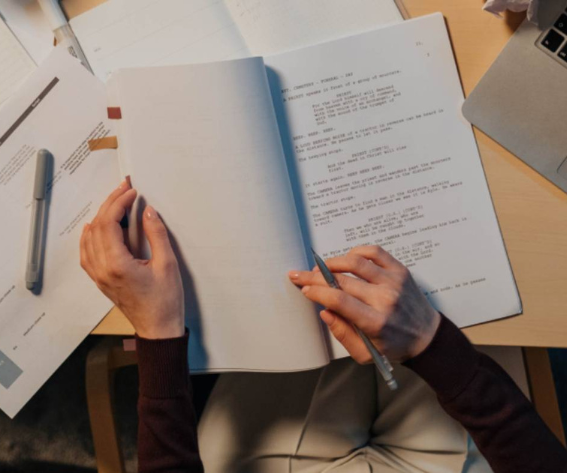
Screenplay competitions receive thousands of submissions each year. Most scripts get rejected in the first round. The gap between winners and rejects often comes down to small details.
Awards go to screenplays that feel complete as film blueprints. That means thinking beyond dialogue and action lines. It means considering every element that will appear on screen.
Structure Your Story With Intention, Not Formula
Three-act structure gets taught everywhere. The problem is simple. Judges read dozens of scripts following the exact same beats. They predict the midpoint twist on page 55. They see the dark night coming on page 85. Winning scripts understand structure but hide the formula.
Here’s how to approach structure differently:
- Identify opposing forces clearly. Start with your protagonist’s specific want. Then determine the exact opposite outcome. Your story moves between these two poles organically.
- Make pursuit create new problems. If your character wants forgiveness, make that pursuit force them to commit new wrongs. The chase for one thing should complicate everything else.
- Break patterns for good reasons. Set up expectations, then subvert them intelligently. Your second act should complicate the premise. Your third act should feel inevitable but surprising.
UCLA Extension’s screenwriting program teaches that structure serves story, not the reverse. Beat sheets help with planning. They should stay invisible in the final product. Hide your structural bones under character choice and surprising consequence.
Judges notice when you subvert expectations intelligently. That doesn’t mean random plot twists. It means breaking patterns for clear reasons rooted in character.
Develop Characters Through Action, Not Description
Film is a visual medium. Character descriptions that run for paragraphs waste space. Nobody cares that your protagonist has “haunted eyes.” Show that haunting through what they do.
Every character should want something specific in every scene. Minor characters need agendas too. The barista serving coffee in scene four needs more than beverage delivery. Maybe they angle for a bigger tip. Maybe they practice small talk after just moving to town. These tiny wants create texture.
Winning screenplays feature characters who make hard choices. Not choices between good and evil. Choices between two difficult goods or two necessary evils. Your protagonist should face moments where every option carries real cost. Judges remember characters who act surprisingly but consistently.
Consider these character development techniques:
- Action defines more than dialogue. When your character says one thing but does another, the action is what we believe. Use this gap to create complexity.
- Give each character contradictions. A character who values honesty but lies when convenient feels more real. People contain contradictions. Your characters should too.
- Make choices reveal values. Don’t tell us your character is brave. Show them choosing courage when fear would be easier.
Dialogue reveals character. Action defines them. Always choose showing over telling.
Consider the Score and Sound Design
Music shapes how audiences experience films. Winning screenplays include thoughtful sound cues that guide emotional beats. These cues help readers imagine the finished film without over-directing.
Professional film composers work with live musicians to create memorable scores. String sections deliver the emotional weight in award-winning films. Violins, violas, and cellos carry the story forward through sound. These musicians travel between studios and recording sessions constantly. They cross cities and countries for work. Expensive instruments need reliable protection during all this travel. Companies like Great Violin Cases provide that security for professional musicians. Their instruments arrive safely at each session.
This professional reality should inform how you write scripts. Real musicians will interpret your story through their instruments. You need to approach sound design with that in mind. Leave room for a composer to add layers you cannot fully describe. Write with respect for the collaboration between visual and auditory storytelling.
Films that won screenplay awards in recent years share something. Most feature scores that elevate key moments. The scripts likely included smart sound cues for composers. Your screenplay should do the same. Give direction without being heavy-handed.
Polish Every Element Before You Submit
Professional formatting matters more than many writers think. Scripts with inconsistent margins signal amateur work. Incorrect spacing does the same. Judges often decide within the first ten pages. Sloppiness in format suggests sloppiness in storytelling.
Use screenwriting software like Final Draft or WriterDuet. These programs handle technical formatting automatically. They save you from rookie mistakes. Character names get centered correctly. Slug lines follow the right format. The National Archives preserves screenplays as cultural artifacts. All follow industry standard formatting.
Read your script aloud before submission. Dialogue that looks fine on paper often sounds wooden when spoken. Awkward phrasing reveals itself immediately when you hear it. Your ear catches rhythm problems your eye missed. Record yourself reading if possible. Listen back for places where you stumbled.
Cut anything that doesn’t advance story or develop character. Winning scripts are lean. They skip clever tangents. They avoid beautiful descriptions that fail to serve the narrative. Every scene should change something. Remove any scene that doesn’t affect the outcome.
Take the Long View on Competition Strategy
Award-winning screenwriters treat competitions as one part of a larger plan. They submit to festivals that match their genre and style. They research judges when possible. They understand that rejections outnumber acceptances by wide margins.
Keep writing between submissions. Each screenplay teaches you something about craft. Your fifth script will be stronger than your first. Judges often recognize writers who developed a distinctive voice through years of work. That voice comes from writing regularly, not from studying books.
Connect with other screenwriters who take craft seriously. Join workshops where people give honest feedback. Avoid groups where everyone just praises each other. You need readers who tell you when your second act drags. You need people who point out when dialogue sounds identical for every character. Film is a collaborative medium. Screenwriting should be too.
Focus on the elements you control. You can’t control whether judges connect with your premise. You can’t control whether they already read five similar scripts. You can control the quality of your craft. You can control whether you submit work that’s truly ready. Most importantly, you can control whether you keep improving with each project.
You may also like:







Leave a reply