
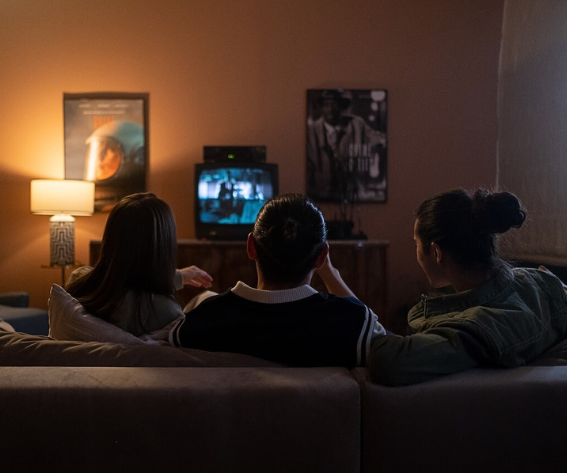
Movies are often described as escape, entertainment, or art, but they can also function as a form of cognitive care. The moving image shapes how we remember, feel, and make sense of experience. When we watch a film, we do more than consume a story. We reconstruct time, inhabit other minds, and rehearse emotional responses in a safe imaginative space. This makes cinema a powerful training ground for memory, empathy, and creativity, skills that are central to both everyday life and filmmaking itself.
Reconstructing rather than replaying memory
In a study reported by LiveScience, researchers found that mentally reconstructing learning contexts helps the brain sharpen recall shortly after learning. The reconstruction nudges your brain to rebuild the information rather than rewatch it. This finding is striking for cinema because films constantly ask viewers to reconstruct scenes, motives, and timelines. We fill in gaps between shots, infer what happens offscreen, and piece together fragmented narratives. Each act of viewing becomes a subtle exercise in memory building rather than passive playback.
Watching films can therefore mirror the brain’s natural process of recollection. When we revisit a movie, we rarely remember every detail exactly as it appeared. Instead, we rebuild the story from emotional landmarks, visual motifs, and personal associations. This active reconstruction strengthens neural pathways tied to narrative memory, much like recalling a meaningful personal event. Over time, cinema can train us to remember more richly, not just more accurately.
The classroom power of movies is one reason universities have increasingly treated film as a serious academic discipline. Courses in film theory, history, and production teach students to analyze images, sounds, and structures that shape cultural memory. In this sense, studying film becomes more than artistic training. It becomes a way to understand how societies remember, forget, and feel together through shared stories.
Beyond formal education, cognitive research also suggests that learning strategies tied to narrative and imagery outperform rote repetition. Research summarized by ScholarMix highlights that meaningful context, emotional engagement, and visual association make information stick. Films naturally combine all three, embedding facts and ideas within characters, conflict, and atmosphere that our brains are wired to retain.
Simple tools can amplify this effect. Even humble flashcards become more powerful when paired with cinematic thinking. Instead of memorizing isolated facts, you can link each card to a scene, image, or soundtrack in your mind, turning study into a kind of personal movie montage that is easier to recall later.
Memory in Motion
Film is uniquely suited to train memory because it fuses time, movement, and emotion. Unlike a photograph, which freezes a moment, cinema preserves change. This mirrors how human memory works, less like a static archive and more like a living narrative that evolves with each recollection. When viewers track a character across a two-hour arc, they practice holding information over time, updating it, and integrating new insights.
Editors and directors exploit this by guiding attention with rhythm, framing, and repetition. A recurring visual motif or musical cue acts like a memory anchor that helps audiences orient themselves within complex stories. Learning to notice these patterns can sharpen our own recall skills in daily life.
Story, Emotion, and Recall
Emotion is one of the strongest triggers of memory. People often remember where they were during major events because of how they felt, not because of factual detail. Films deliberately activate this mechanism. A well-crafted scene pairs image, performance, and sound to generate a visceral response that imprints itself in the viewer’s mind.
For aspiring filmmakers, understanding this link is crucial. Crafting memorable cinema means designing experiences that audiences will carry with them long after the credits roll. In that sense, filmmaking is as much about shaping collective memory as it is about telling stories.
Film as a Laboratory for the Mind
Movies also function as safe experiments in empathy and perspective-taking. By inhabiting characters with different backgrounds, viewers rehearse social cognition and emotional reasoning. This mental simulation can strengthen memory for interpersonal experiences and improve our ability to interpret real-world situations.
Cognitive scientists often describe imagination as a form of memory in reverse, projecting past knowledge into future scenarios. Cinema trains this skill by constantly asking viewers to predict, interpret, and revise their understanding of what they see.
Practical Tools for Creative Memory
Filmmakers and students can intentionally use cinematic techniques to enhance their own learning. Visual journaling, storyboarding, and scene reconstruction exercises encourage active recall. Watching a film once for story and a second time for structure helps the brain practice both emotional and analytical memory.
Even non-filmmakers can benefit. Turning life events into short mental scenes, complete with imagined camera angles and soundtracks, makes them easier to remember and reflect upon.
Why Filmmakers Benefit Most
For directors, screenwriters, and editors, memory is both subject and instrument. They draw on personal experience to create art while also shaping how audiences will remember their work. Training the mind through film viewing and analysis can therefore sharpen creative intuition as well as cognitive resilience.
Cinema as Care
In an age of distraction, cinema offers a rare space for sustained attention and deep feeling. When approached thoughtfully, it can act like a workout for the mind and a balm for the emotions. By engaging memory through story, image, and sound, movies do more than entertain. They help us remember who we are, how we feel, and how we connect to one another.
Seen this way, cinema becomes a form of cognitive care, a medium that strengthens memory while nourishing imagination and empathy.
You may also like:




Leave a reply