
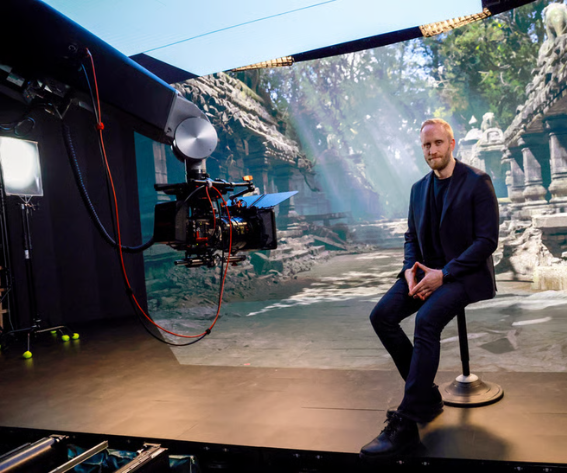
For decades, location scouting has been one of the most time-consuming and expensive parts of filmmaking. Crews travel across cities or countries, secure permits, negotiate with property owners, and adapt scripts to fit real-world constraints. Today, artificial intelligence is rapidly changing that equation. With AI-generated environments, virtual location libraries, and real-time background replacement, filmmakers are no longer limited by geography. Locations can now be designed, modified, and approved without ever leaving the studio.
Technology Is Streamlining Production Workflows
This shift mirrors broader changes across creative industries, where digital tools streamline traditional workflows, much like how platforms such as 1xBet use technology to remove friction and give users faster access to what they want. In filmmaking, AI-driven location tools eliminate weeks of travel and paperwork, allowing directors and producers to focus more on storytelling and visual style rather than logistics.
AI Generated Environments Replace Physical Travel
At the core of this transformation are AI image-generation and 3D environment tools. Filmmakers can input a script description such as a rainy neon-lit alley in Tokyo or a remote desert town at sunset and generate multiple visual options within minutes. These synthetic locations can be refined endlessly, changing weather, architecture, lighting, or cultural details without reshoots or additional costs. What once required international travel can now be achieved on a laptop during pre-production.
Virtual Production Changes On Set Filmmaking
Virtual production pipelines push this even further. By combining AI-generated backgrounds with LED walls or green screen, actors can perform inside convincing digital locations that respond in real time to camera movement. This reduces travel and permit expenses and solves scheduling conflicts and weather-related delays. Productions no longer have to wait for the perfect day to shoot because AI-generated environments remain consistent and controllable.
A Major Advantage for Independent Filmmakers
For independent filmmakers, the impact is especially significant. Location permits in major cities can cost thousands of dollars per day, often limiting where low-budget films can shoot. AI levels the playing field by giving smaller productions access to cinematic environments that would otherwise be impossible. A single warehouse or studio space can stand in for dozens of locations, all created digitally and adjusted in post-production.
The Evolving Role of the Location Scout
AI also changes the creative role of the location scout rather than eliminating it entirely. Instead of spending weeks searching for physical spaces, scouts increasingly act as visual curators and world builders. Their expertise guides AI-generated environments toward authenticity, ensuring cultural accuracy and narrative coherence. AI becomes a collaborative tool that accelerates decisions while preserving human judgment.
Creative and Ethical Considerations
There are challenges that come with synthetic locations. Questions around realism, artistic integrity, and audience perception remain important. While AI-generated environments are improving rapidly, some filmmakers worry about visual sameness or the loss of organic imperfections found in real places. Legal frameworks are also evolving, particularly around intellectual property and training data used by AI systems.
The Future of Location Scouting
Looking ahead, AI-driven location creation is likely to become a standard option rather than a novelty. As tools grow more affordable and integrate into editing and VFX software, filmmakers will increasingly decide whether a scene truly needs a physical location. Just as mobile platforms like the 1xBet apk prioritize accessibility and convenience, AI locations prioritize creative freedom and efficiency for modern productions.
Redefining How Films Are Made
In the end, AI is not simply replacing location scouting. It is redefining it. Travel, permits, and physical constraints will still matter for certain stories, but they are no longer the default. Filmmakers now have the power to build worlds first and worry about geography second, marking a fundamental shift in how movies are planned, shot, and imagined.
You may also like:





Leave a reply